Human Rights
The Brief
Make human rights feel personal for a global workforce
Following a human rights impact assessment, Diageo had pledged to act in accordance with the UN Guiding Principles on Business and Human Rights. But a policy commitment means nothing if the people who enact it don’t understand what it means in practice. Colleagues across markets from the UK to Uganda needed to feel what human rights looked like in their day-to-day roles — not just read about it.
The Solution
Paint the walls. Let the voices speak
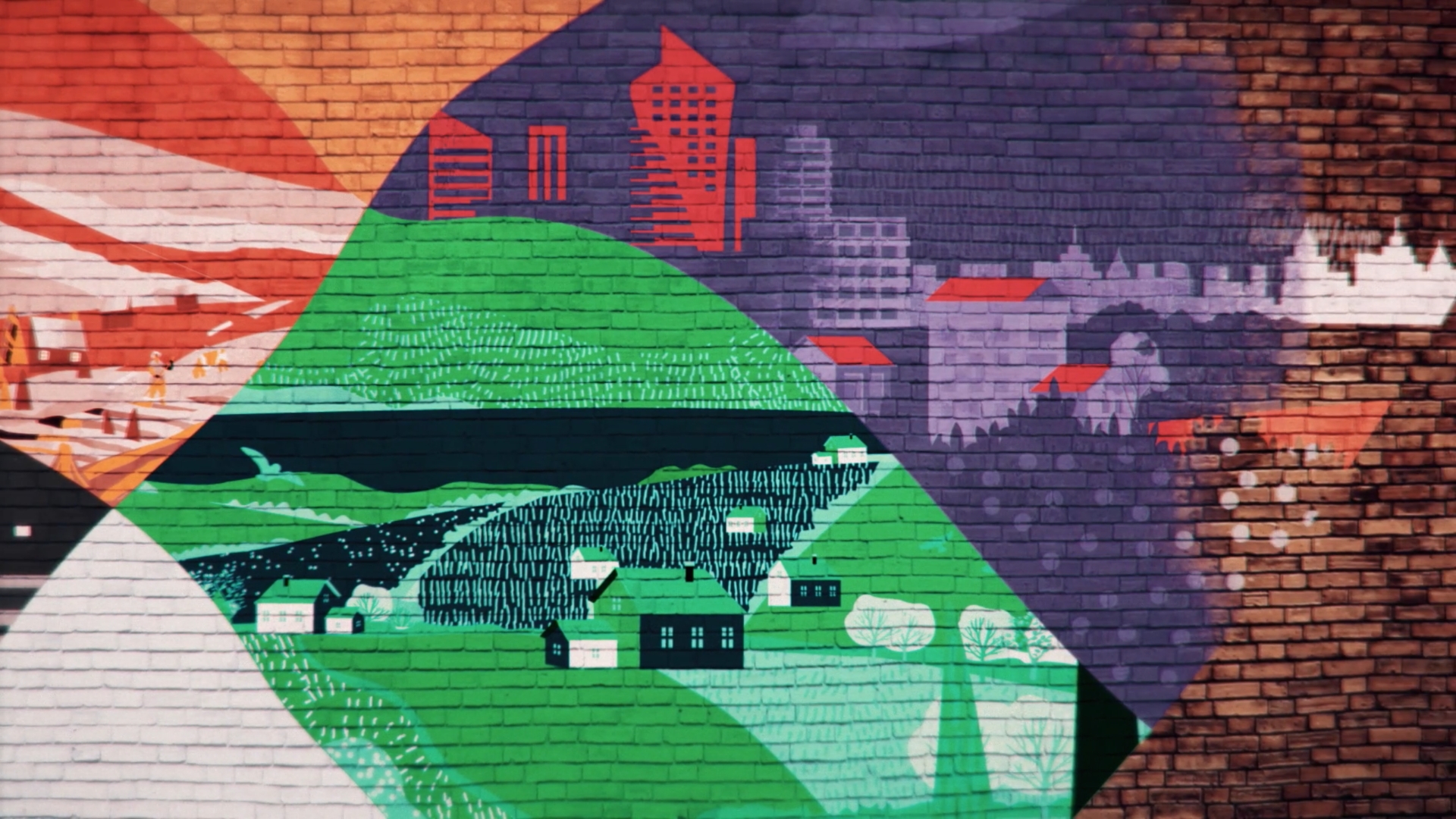
A bold mixed-media film combining photorealism, illustration, and animated graffiti with first-person stories from Diageo colleagues around the world. No talking heads. No filmed Zoom calls. Instead, a performative artistic journey where a bare brick wall fills with colour, culture, and conviction as real voices unpack what human rights means in their world of work.
A UN commitment without workforce understanding is a promise nobody can keep
In 2015, Diageo identified areas for improvement across their value chain following a formal human rights impact assessment. The commitment was public and the standards were clear. What was missing was internal comprehension — the workforce understanding what ‘human rights’ actually meant for them.
Diageo needed something human, positive, and emotionally engaging. It had to be simple enough for a wide range of markets to understand, yet visual, bold, and evocative enough to stand out from the thousands of internal communications employees receive every week.
The constraint was production: pandemic restrictions made traditional filming impossible. The approach needed to bring through real voices without another set of talking heads or corporate video calls.
Human Rights Awareness Film
Our Approach
Use the oldest form of human expression to tell the newest story
Graffiti is an expression of hidden culture — the voice of the marginalised, the unseen, the unheard. It’s been a form of human expression for tens of thousands of years. As a medium, it gave us something real, authentic, and vibrant — with the visual spark to set the film apart.
We recorded interviews with Diageo colleagues remotely and asked them to film themselves. Using EbSynth, we brought photo-realistic portraits to life as animated graffiti. Procreate and After Effects pulled it all together into a stunning, stylised artistic journey.
The result: a bare brick wall that fills with colour as colleagues from the UK to Uganda share emotive personal stories — visually and aurally flexing across cultures, locations, and ideas. Human rights told through human expression.
Social Assets
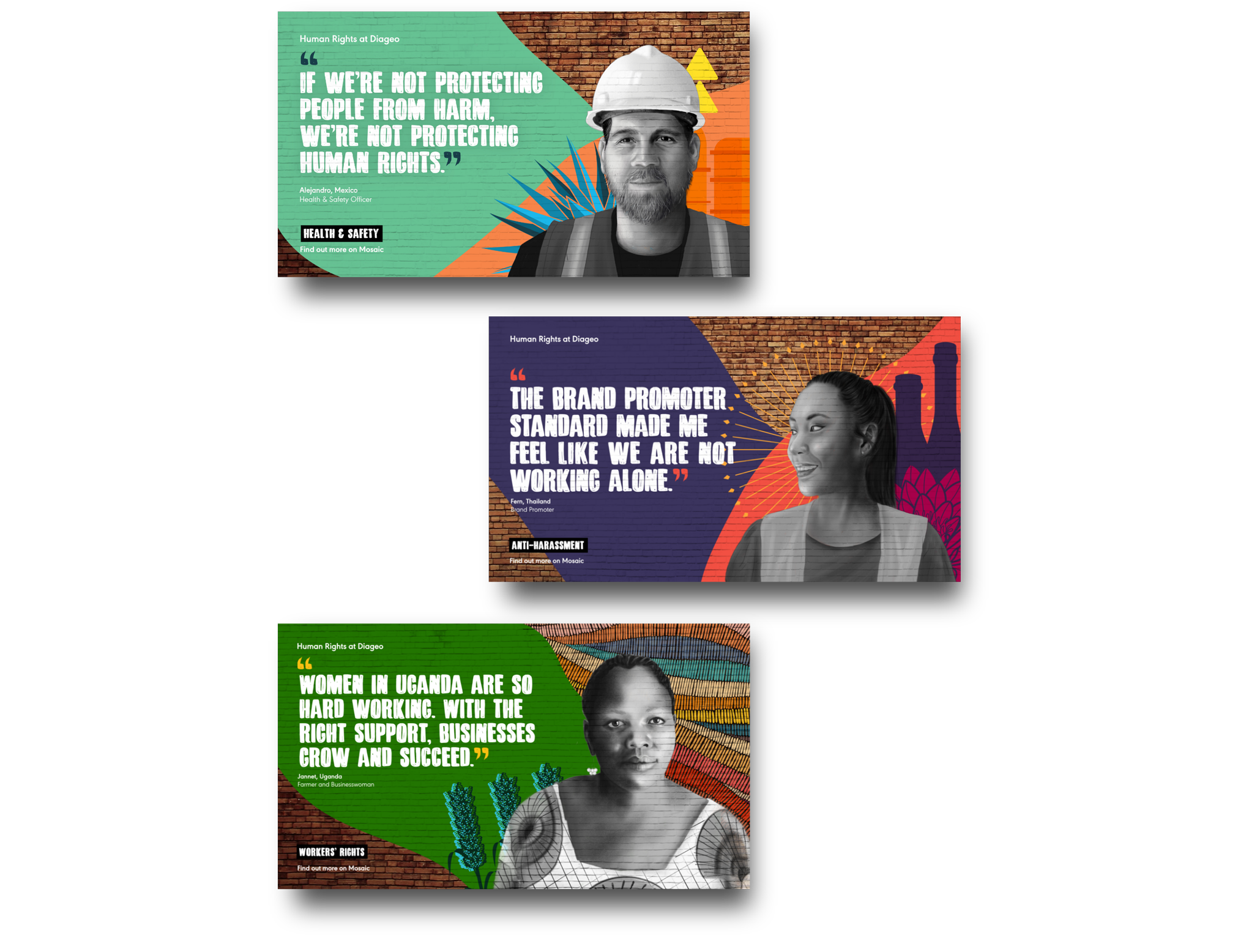
Key Project Assets
Mixed-Media Human Rights Film
A bold animated film combining graffiti art, photorealistic portraits, and first-person audio — giving human rights a visual language as powerful as the subject demands.
Remote-First Production Framework
A pandemic-adapted approach using self-filmed interviews and AI-assisted animation — delivering cinematic quality without traditional production logistics.
Global Cultural Adaptation
A visual and narrative approach designed to resonate across Diageo’s diverse markets without requiring localisation of the core creative.
Impact
The film gave Diageo’s human rights commitment a visual identity and an emotional entry point — transforming a policy document into something people could see, hear, and feel.
Project Insights
From policy document to expression
Human rights training usually starts with definitions and ends with compliance. We started with graffiti — one of the oldest forms of human protest — and ended with real voices telling real stories. The medium became the message.
When a colleague in Uganda and a colleague in London both feature in the same film, speaking from their own experience, human rights stops being an abstract principle. It becomes something you can see on a wall and hear in a voice. That’s when it sticks.
The graffiti concept gave us something real, authentic, and entirely human — with the visual spark to set it apart from the thousands of communications employees receive every week.
Paul Mallaghan, Director of Creative Strategy & Content — We Are Tilt
 Human rights through human expression