Respect & Inclusion
The Brief
Make 470,000 professionals confront the biases they don’t believe they have
Deloitte’s existing Respect & Inclusion training wasn’t changing behaviour. Completion rates were high but the content was forgettable — focused on overt misconduct that most employees already avoided. The real damage was happening below the surface: casual comments, unconscious bias, micro-aggressions passed off as banter. The firm needed an experience that made people feel something uncomfortable enough to change.
The Solution
Stop lecturing. Start showing
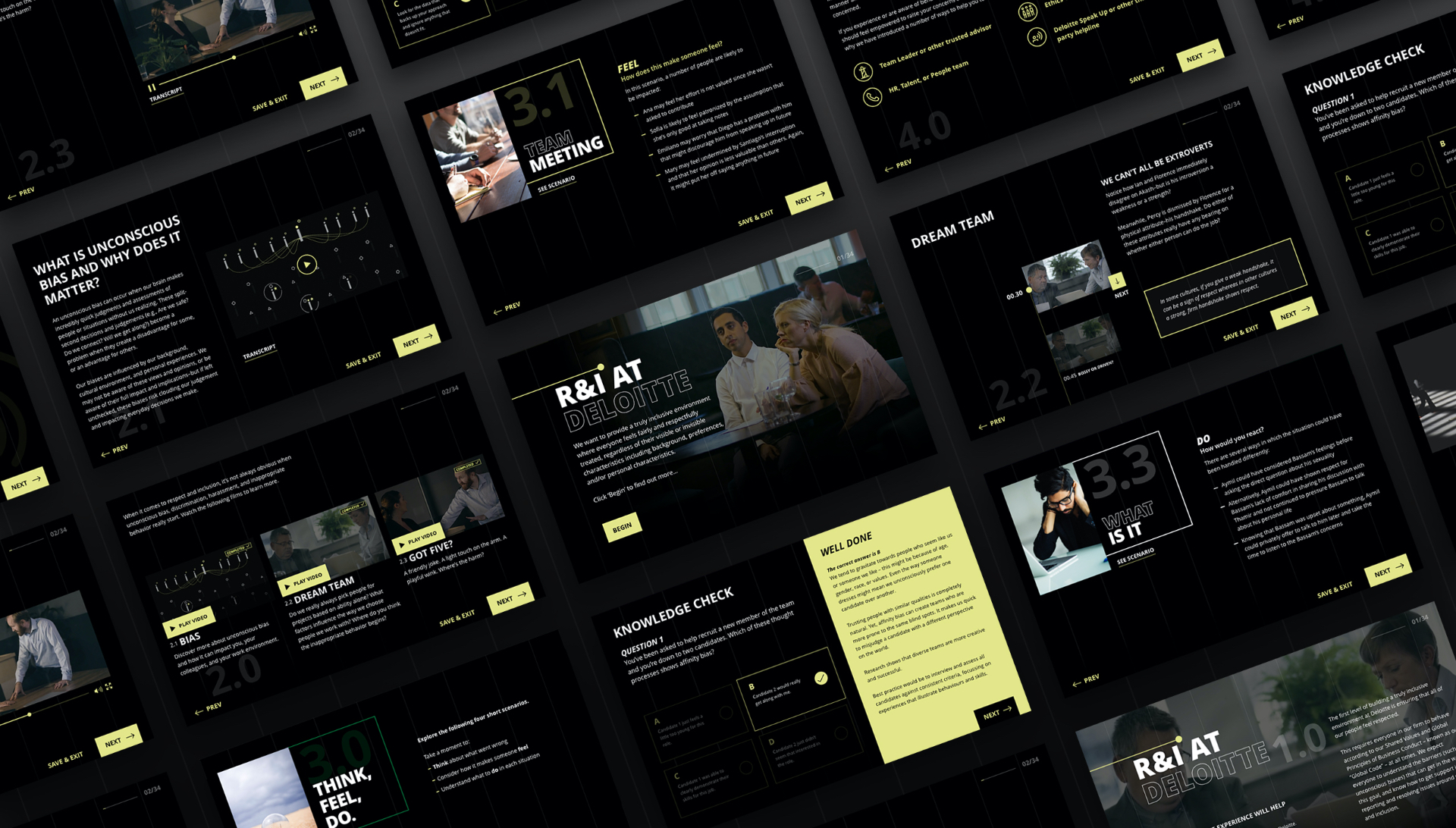
A dramatised film series paired with an interactive learning experience, designed to surface the subtle, everyday behaviours that erode inclusion. No compliance boxes. No corporate narration. Instead, realistic workplace scenarios that let viewers see themselves — and an interactive layer that forced genuine reflection before moving on.
There’s a story behind the story
This case study is under wraps. Enter the password to see the full work — or drop us a line and we’ll let you in.
or get in touch
Completion rates were high. Behavioural change wasn’t.
Deloitte is one of the world’s largest employers of professionals. When inclusion fails at that scale, the consequences are measured in attrition, grievance proceedings, and reputational risk. The firm had a clear philosophy around respect and inclusion, but the existing learning experience wasn’t translating policy into practice.
The challenge was nuance. Most people don’t see themselves as biased. Overt misconduct is easy to condemn — it’s the subtle, pernicious behaviours that do the most damage: the offhand comment, the assumption, the ‘joke’ that lands differently depending on who’s in the room.
Deloitte needed content that would make people examine their own behaviour — not just recognise bad behaviour in others. The audience was every professional in the UK firm, with a mandate to scale globally if the approach worked.
Our Approach
Make it personal enough to sting
We created dramatised films depicting realistic workplace scenarios — not extreme cases, but everyday moments where bias operates quietly. The scenarios were deliberately ambiguous, designed to provoke disagreement rather than easy consensus.
An animated introduction to unconscious bias set the frame: a two-minute piece exploring what bias is, how it works, and what impact it has. This gave learners a lens through which to watch the films — and through which to examine their own assumptions.
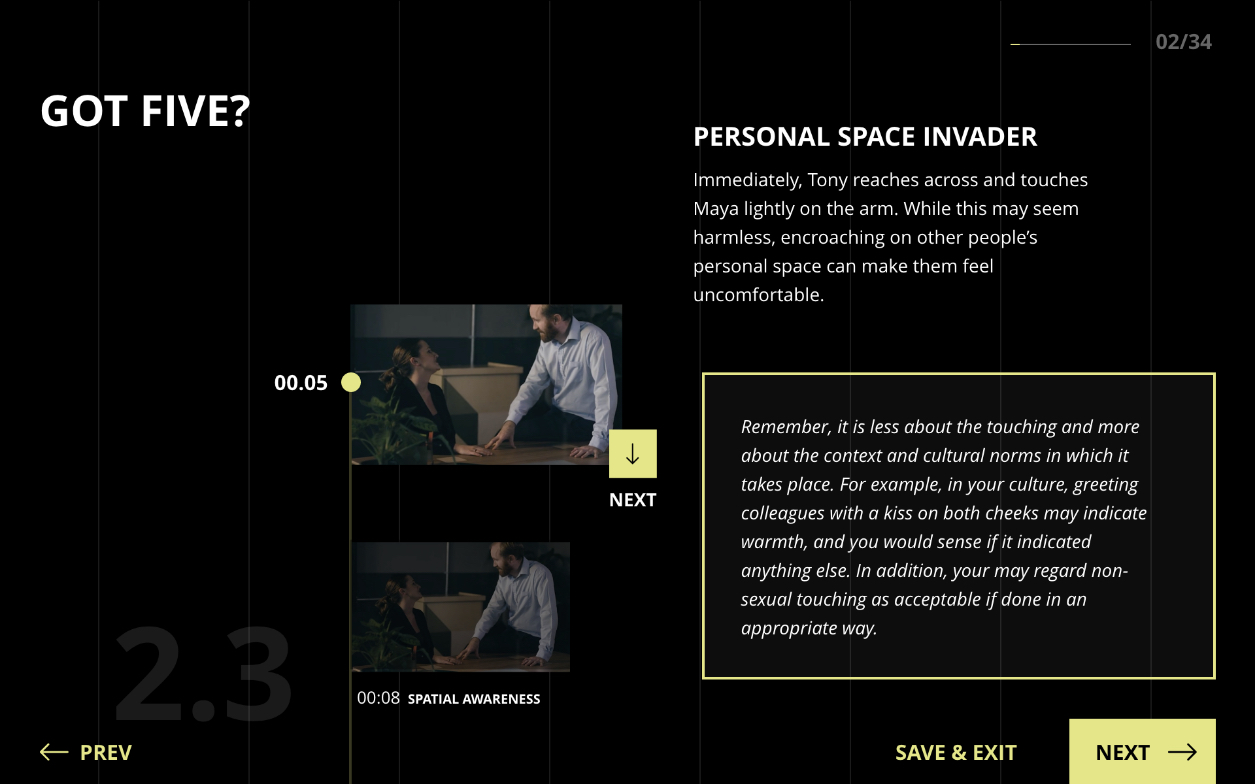
The interactive layer was critical. After each scenario, learners could reflect, interrogate key scenes, and review moments from different perspectives. The experience treated the audience as adults capable of reaching the right conclusions — not children who needed to be told the answer.
The Stories and Science
Key Project Assets
Dramatised Workplace Scenario Films
A series of realistic films depicting everyday bias in professional settings — designed to be ambiguous enough to provoke genuine reflection, not comfortable enough to dismiss.
Unconscious Bias Animation
A two-minute animated primer contextualising unconscious bias for a professional audience — the lens through which the entire experience is designed to be viewed.
Interactive Reflection Interface
A web-based layer enabling learners to interrogate, replay, and review key film scenes from multiple perspectives — turning passive viewing into active self-examination.
Impact
The experience generated the kind of unprompted qualitative feedback that compliance training almost never receives — and scaled from a UK pilot to a global programme reaching over 1.5 million professionals.
Project Insights
From compliance exercise to mirror
Most inclusion training fails because it targets the wrong behaviour. It addresses the misconduct people already know is wrong and ignores the everyday moments where real damage happens. We went after the subtle stuff — the comments that get laughed off, the assumptions that go unchallenged.
When a senior manager at Deloitte says the training forced them to examine their own assumptions, that’s not a completion metric. That’s behaviour change. And that’s the only metric that actually matters.
It’s absolutely spot on. I really like the tone — non-hierarchical rather than a parent-child approach. The content has moved the discussion from some of the more overt behaviours to the more subtle micro-aggressions.
Senior Manager — Deloitte