Think Ethics
The Brief
Build an ethics culture inside an organisation racing to innovate
BP was accelerating its technical transformation, investing heavily in AI and digital innovation. But speed creates risk. Without a culture of digital ethics embedded across the organisation, the firm faced the prospect of unintended consequences at scale — biased algorithms, exclusionary products, decisions made without pause. BP needed people to stop and think before they shipped.
The Solution
Put the elephant in the room. Literally.
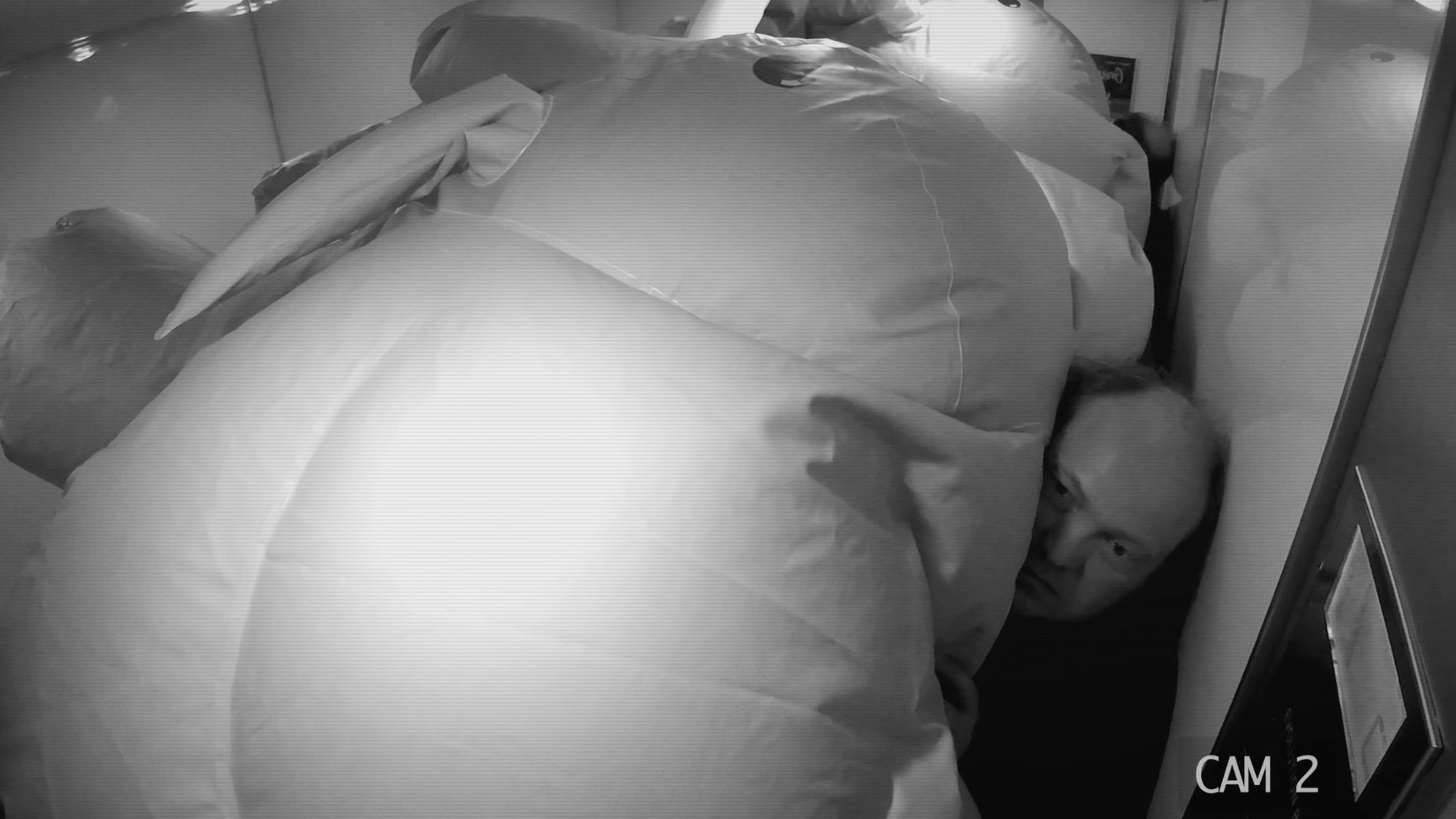
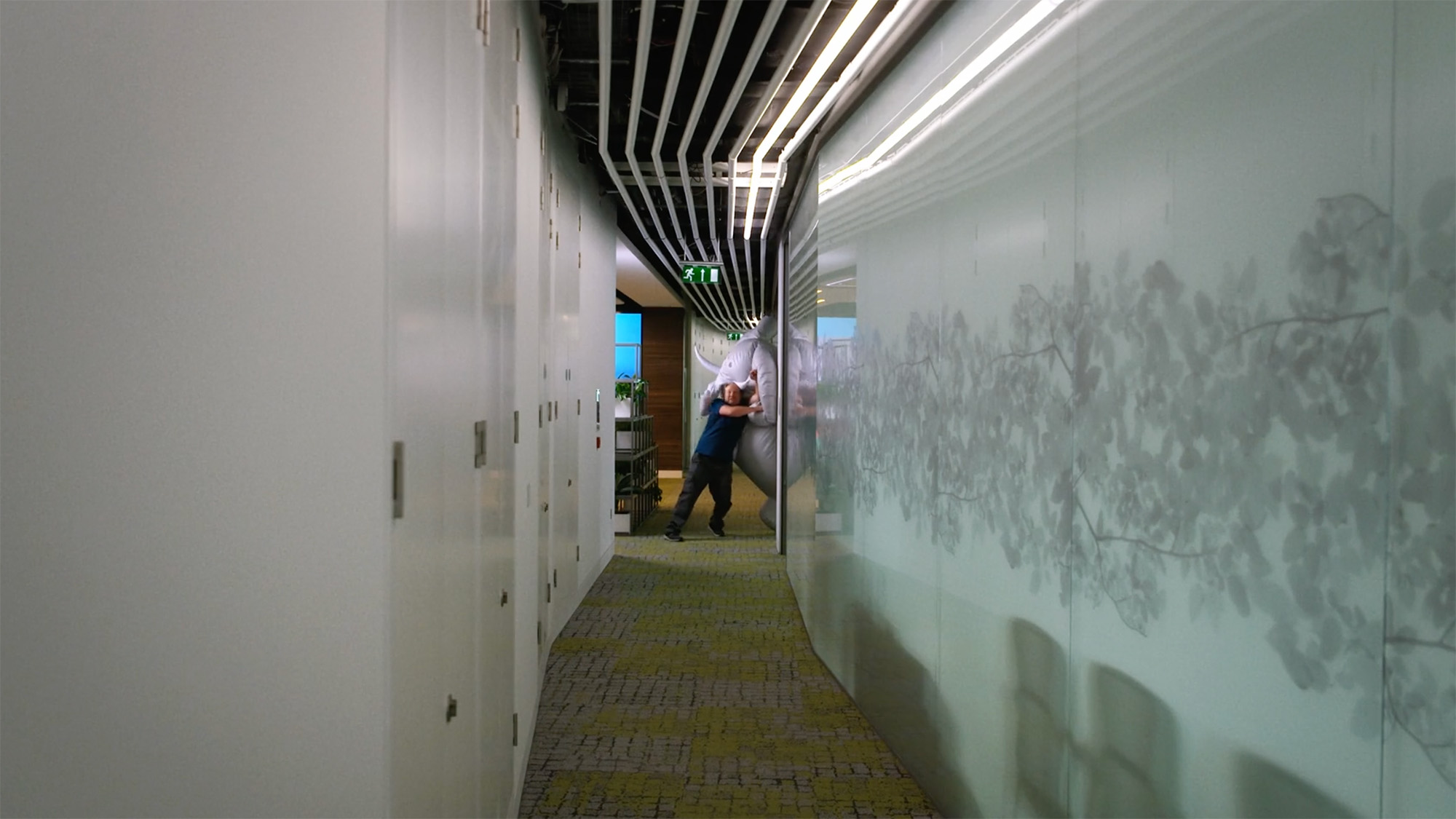
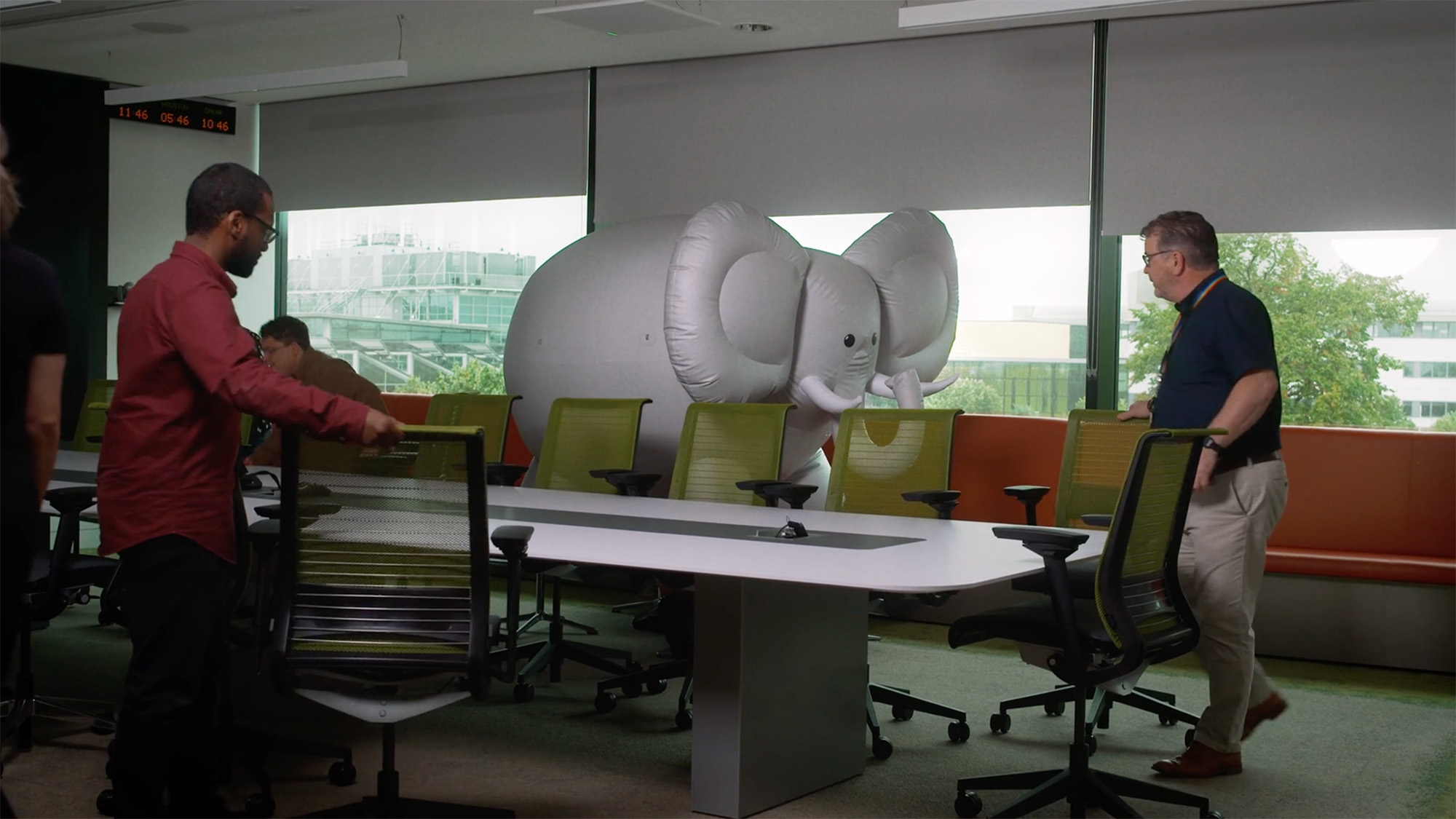
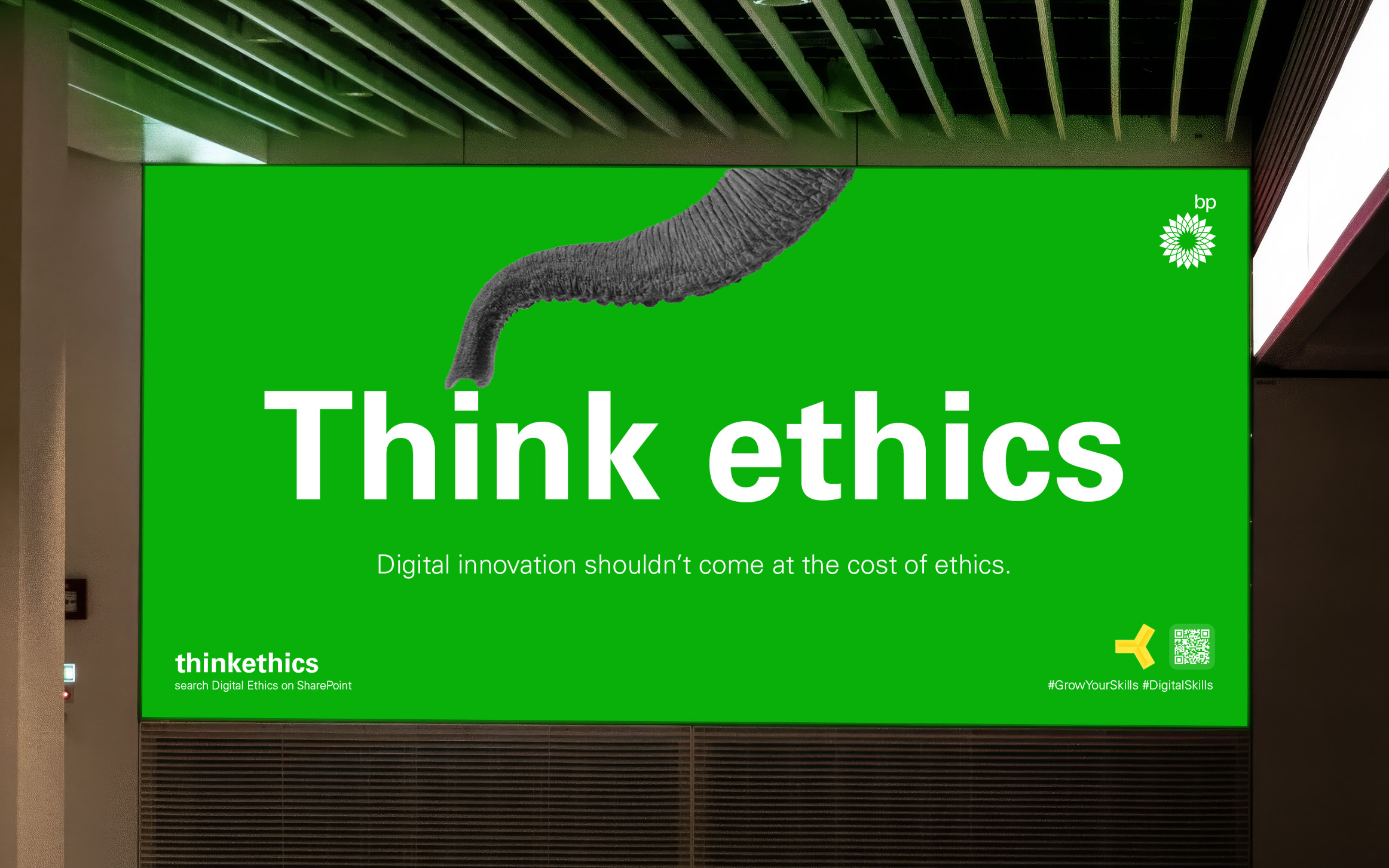
A multi-channel campaign built around B-Lon Tusk — an inflatable elephant character who became BP’s memetic mascot for digital ethics. A launch film, physical installations in BP offices, desk drops, social content, and ethical challenges turned an abstract concept into something people couldn’t ignore, couldn’t stop talking about, and couldn’t forget.
FILM STILLS
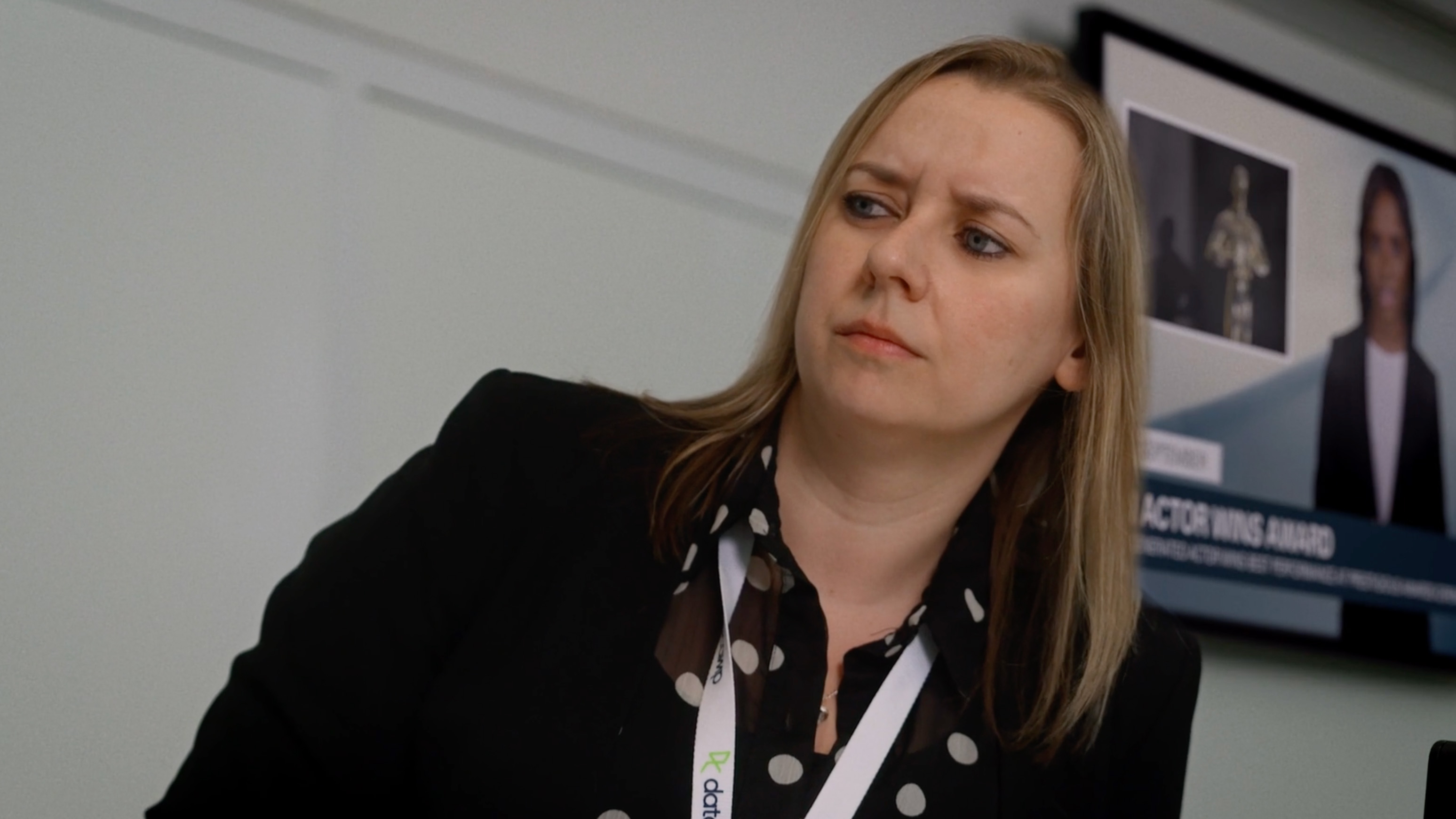
AI doesn’t pause to consider the consequences. People have to.
While some organisations live by the mantra of moving fast and breaking things, BP takes a more considered approach. With the rise in artificial intelligence and the push for digital innovation, the firm wanted to build a culture of digital ethics to reduce the risk of unintended consequences during its technical transformation.
The problem was visibility. Digital ethics can be the elephant in the room when it comes to innovation — people know it’s there but avoid discussing it when deadlines, financial pressures, and market demands compete for attention.
The brief asked for something humorous, absurd, and abstract — content that would generate genuine interest in a subject most people instinctively avoid. The tone needed to land as playful, not preachy.
Special Delivery — B-Lon Tusk Launch Film
Our Approach
Make ethics impossible to ignore
We structured the campaign around three aims: make people aware of digital ethics, make them care about it, and prepare them with tools to act. The creative centrepiece was B-Lon Tusk — a memetic, sticky character that literally put the elephant in the room.
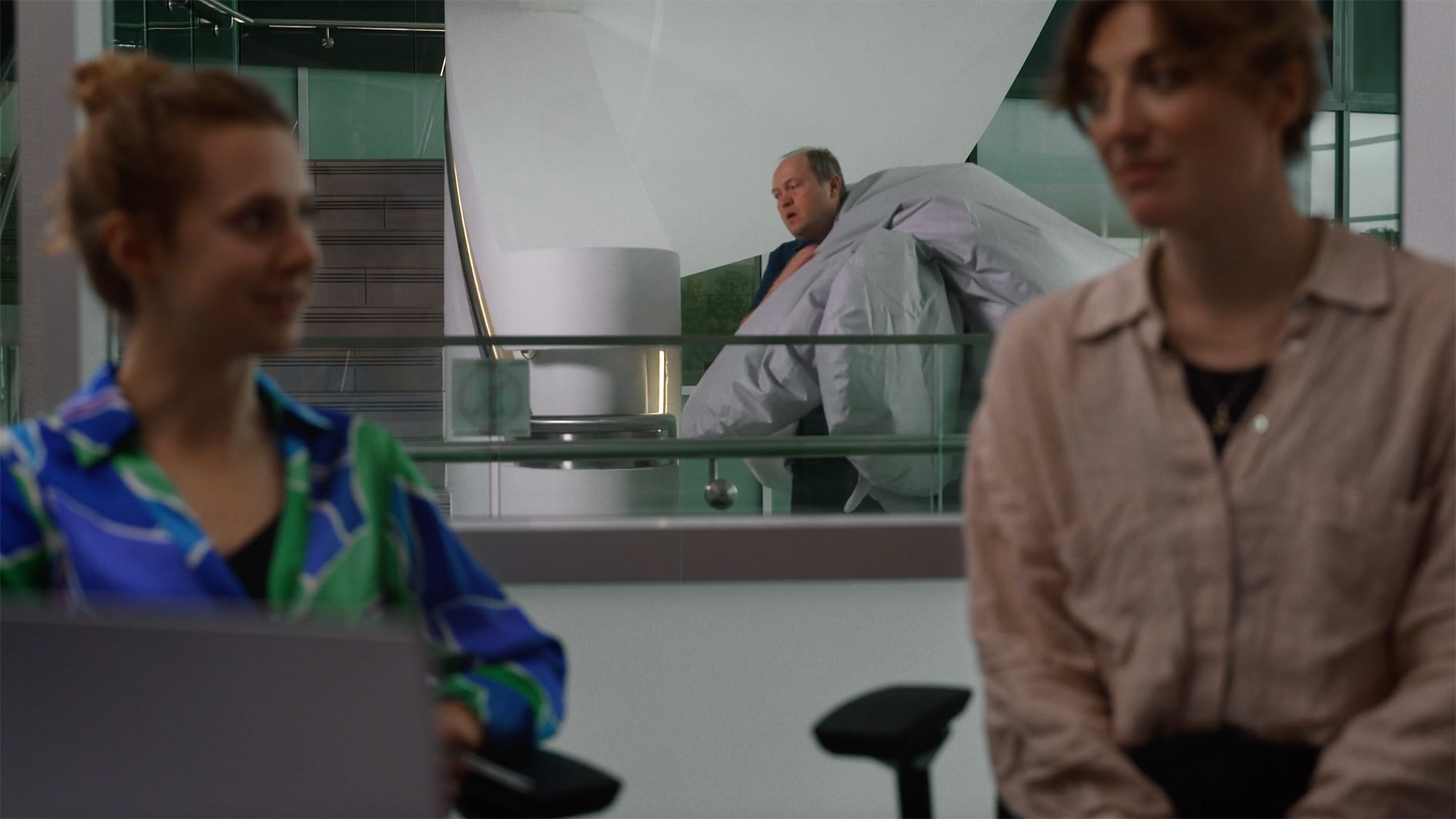
An inflatable elephant arrived at BP offices. User-generated content of the elephant being moved through corridors was shared across social channels, generating curiosity and discussion before the launch film even dropped. The film itself was playful and absurd — inspired by the tone of shows like BoJack Horseman.
Beyond the launch, posters, desk drops, and ethical challenges kept the conversation alive. We also branded and developed BP’s Innovation Assessment Tool — the practical instrument teams now use on every digital project, all carrying the B-Lon Tusk identity.
We realised that digital ethics can sometimes be the elephant in the room when it comes to innovation. People know it’s there but avoid it. So we made the elephant impossible to miss.
Tristan Vanger, Creative Director, We Are Tilt
Key Project Assets
B-Lon Tusk Campaign Character
A memetic, shareable mascot for digital ethics — an inflatable elephant that became a permanent symbol of the need to pause and think before innovating.
Special Delivery Launch Film
A playful, absurdist short film conveying the key messages of digital ethics with humour and warmth — designed to generate conversation, not compliance.
Innovation Assessment Tool Branding
The practical ethics tool teams now use on every digital project at BP — branded with the B-Lon Tusk identity to maintain the campaign’s cultural presence.
Impact
The elephant became a permanent fixture in BP’s innovation culture — a symbol that transformed digital ethics from an abstract concept into an organisational reflex.
Putting the elephant in the room
Project Insights
From abstract principle to office mascot
You can’t build a culture of ethics with a compliance module. You build it with a character people remember, a joke they retell, and a physical object that shows up in their office and makes them ask what it means.
An inflatable elephant. A two-minute film. A tool that every digital project now has to pass through. That’s how you make ethics part of the culture, not just part of the policy. Sometimes the best way to get people to think is to make them laugh first.