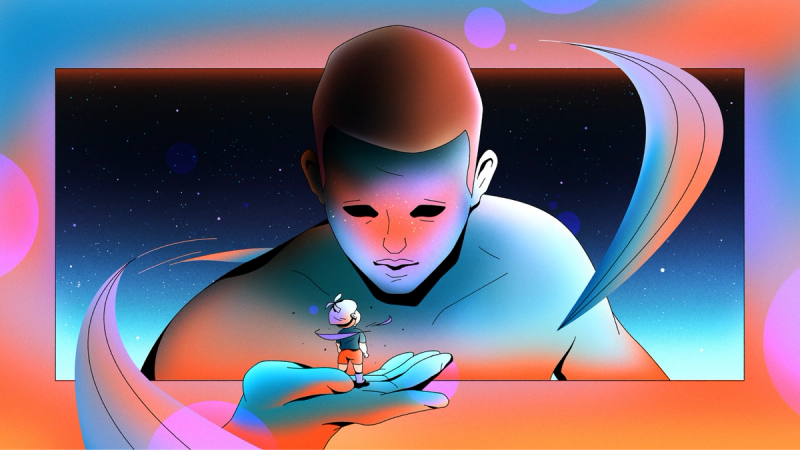

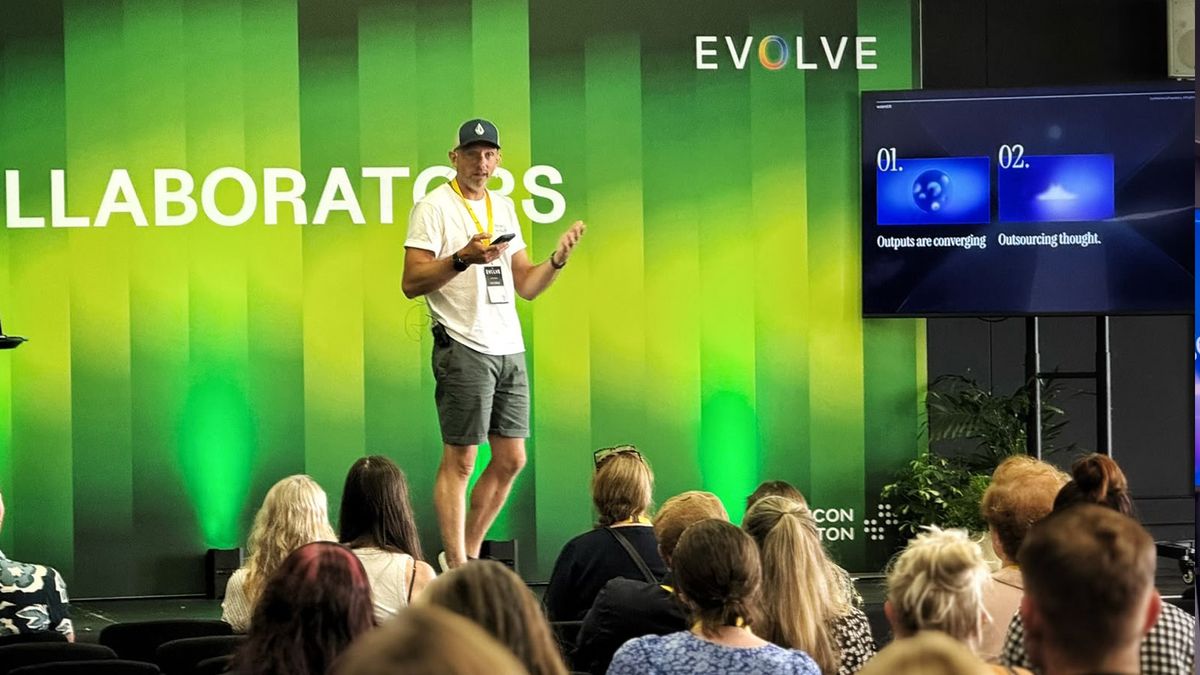
On the 26th June 2026 I gave a talk at EVOLVE: Shaping Tomorrow about the Human Advantage in an A.I world. What follows is a abridged version of those musings. Enjoy.
After A.I. The Human Advantage.
A few weeks ago, Steve Wozniak stood in front of a room of graduating students and opened with six words.
"You all have AI. Actual Intelligence."
The room erupted with applause and relief.
Around the same time, Eric Schmidt, the former CEO of Google, gave his own commencement speech at another university. His message was the opposite: get on board with A.I, or get left behind.
He was booed. Curious.
The same generation, the same moment in history, two very different framings of the same question. And the inevitability story, the keep-up-or-die story we've all been hearing on repeat for two years, just isn't landing anymore. At least not with the people about to inherit the world it builds.
So what did Wozniak see that Schmidt missed?
I think it's this. There's a race on, and everyone's in it: every person, every team, every business, bolting A.I onto everything they do, driven by a quiet fear of being left behind (FOMO). The promise is intoxicating, and in some instances some of the early returns are real. I'm not here to tell you otherwise.
But the race isn't really about A.I at all. It's about us. What we're willing to keep, what we're willing to trade, and what we're left with when the dust settles.
So if the race is real, what are we quietly trading away to win it? Because like everything in life ... there must be balance.
So, what are we trading?
Three things, and they get worse as we go.
First, a business problem: everything is starting to sound the same.Same models, same training data, same incentives, used by everyone. Every article, post and deck reads like it was written by someone who's just discovered a thesaurus. Clean, competent, identical. There's a word for it now: slop. The smartest answer becomes the safest, the safest becomes the standard, and the thing we used to win on, being different, gets replaced by the thing everyone else also has. That's not a race to the top, or even the bottom. It's a race to the middle. And no business wants to be flattened and forgotten there.
Second, what's happening in our heads.We're not just outsourcing tasks anymore, we're outsourcing thought. Researchers at Wharton have a name for it:cognitive surrender. They found that when people have an A.I chatbot to hand, many stop reasoning altogether, and when the answer came back wrong, they followed it anyway, more confidently than they'd have trusted their own thinking. Sit with that. The answer was wrong, and they trusted it more than themselves. Because it came back fast, clean and confident. And perhaps because they didn't have the expertise to question it.
Third, the one that worries me most: a creative scar.The more we lean on these tools, the more our own ability to think atrophies. What you don't use, you lose. Think of sat-navs, and how many of us now reach for one even on a route we know. The damage isn't temporary, it's structural. You can rebuild it, but only if you notice it's gone. And the real risk is that some won't.
Stack all three together. Work that looks the same. Confidence in answers that are wrong. A slow erosion of the very thing that makes us interesting. That's not differentiation. That's becoming boring.
None of this is an argument against A.I. I use it every day, my team uses it every day. It's both extraordinary and ordinary in the same breath. The question was neverwhetherto use it, but how, when, and why.
The brilliant strategist Alex M H Smith(definitely give him a follow) summed up my whole argument in a sentence:
A.I is only useful if you know what good looks like. Otherwise, it's dangerous.
Or, in my words: A.I doesn't replace expertise. Expertise is the thing that makes A.I useful.
And expertise comes from exactly the thing the race asks us to skip. Learning. Lived experience. The struggle. Shortcut the learning and you don't actually learn; you just get very good at producing work you didn't really make and defending ideas you didn't really have. Then something goes wrong, you're asked to explain it, and there's nothing there. The machine did the thinking, and you nodded along.
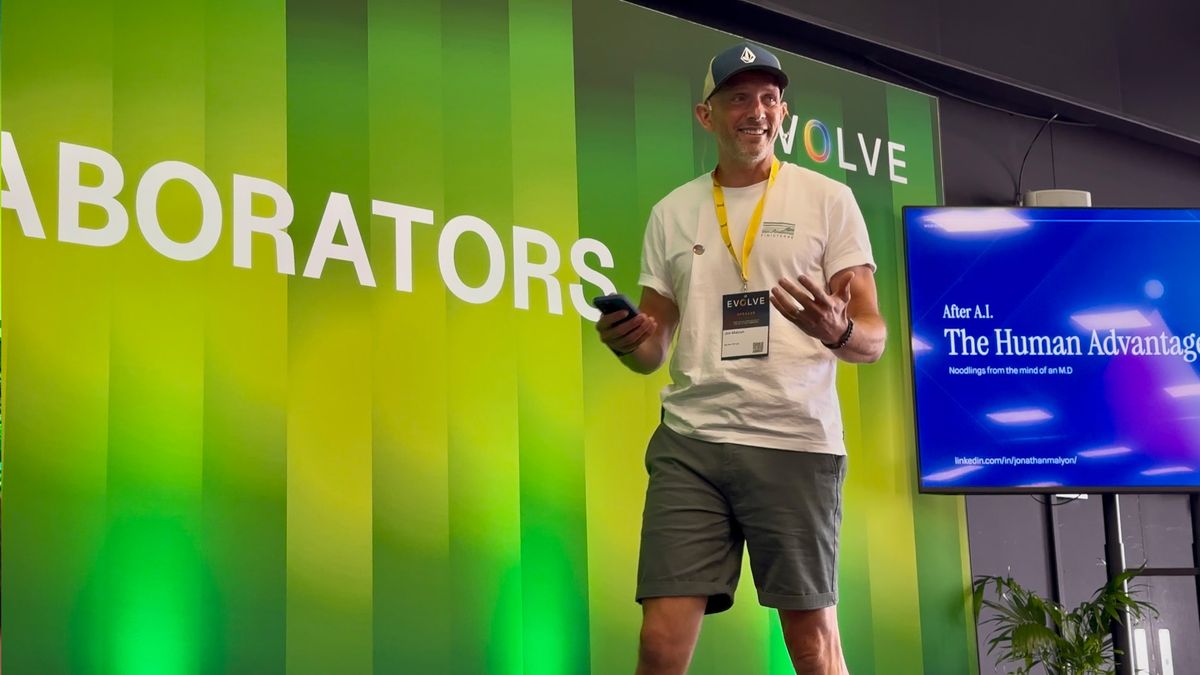
So the move is simple. Use A.I to optimise your thinking, never to shortcut it.
Be the expert. Do the reps. Because only then can you ask the right questions, sense the wrong answer when it lands, and bring real judgement, taste and creative thinking to what A.I hands you. It can generate a thousand options; knowing which one has soul and substance, which one will actually move people, build belief; and trust ... thats the whole game now. A.I has read more of the past than any human ever has and recombines it with startling fluency. But fluency isn't originality. It cannot want something, hold a point of view, or decide what's worth making.
That's ours. It always was.
To my layperson mind, I like to think of A.I as an instrument. In the hands of someone who hasn't done the work, it just makes noise, and that's most of what we're hearing / seeing online right now: confident, beautifully formatted content .... saying nothing.
But, in the hands of someone who's earned their instinct, it's extraordinary. It can take you on a journey of inner discover, create connection and inspire. The instrument hasn't changed. The hands have.
So when someone tells you the future of work makes expertise obsolete, they've got it exactly backwards. It's never been more valuable, especially as everyone else races to shortcut it. Gartner even predicts that, through 2026 & 2027, eroding critical-thinking skills will push half of all organisations to start running "AI-free" skills assessments. A forecast, not a headcount. But sit with what it implies: we're heading for a world where thinking unaided becomes something you have to prove.
The human advantage was never about being better than A.I. It's about being different from one another.
So, three things. Earn your expertise; the struggle is where your advantage is made. Use A.I to optimise your thinking, never to shortcut it. And own that thinking: if you can't defend what you've put your name to, you didn't do the thinking.
Wozniak was right. You already have AI. The actual kind.
Don't ever let anyone convince you to trade it away.
nb: Yes GenAI was used to create the cutaways in the intro film. The point is not to use it, but to learn your craft first, become the expert, then use it. Don't shortcut.