Conservation usually asks you to give something up. Drive less. Fly less. Buy less. The story is almost always about restraint.
Sussex Grazed (our charity partner) tells a different one. It says: buy the steak. Buy the venison. Just buy it from the animals that are rebuilding the South Downs while they graze.
We're proud to share that the Sussex Grazed project has been shortlisted for two PEA Awards, in the Nature and Shopping categories. The PEA (People, Environment, Achievement) Awards have spent sixteen years backing the people changing the planet, often before the rest of us notice. Past winners include David Attenborough. This year Tilt's name sits on the list next to a serving cabinet minister and a teenage climate organiser from Kenya.
Here's why the great work the sussed Grazed team is doing matters.
The South Downs hold some of the rarest habitat in Britain: chalk grassland, thin and flower-rich, the kind that takes centuries to form and an afternoon of neglect to lose. Left alone, it scrubs over. What keeps it alive is grazing. Cattle and sheep break the soil with their hooves, let seeds find the light, and hold back the coarse growth that would otherwise swallow everything. The animals aren't a by-product of conservation here. They're the method.
The problem is that conservation grazing only works if someone buys the meat. No market, no grazing. No grazing, no grassland. Sussex Grazed, a Brighton & Hove Food Partnership project born out of the National Trust's Changing Chalk programme, closes that loop. It runs a pre-order meat box scheme that connects the people eating dinner in Brighton directly to the farmers and deer managers keeping the Downs alive. No waste, no guesswork, no financial gamble for the producer.
Our job was to make people actually want it.
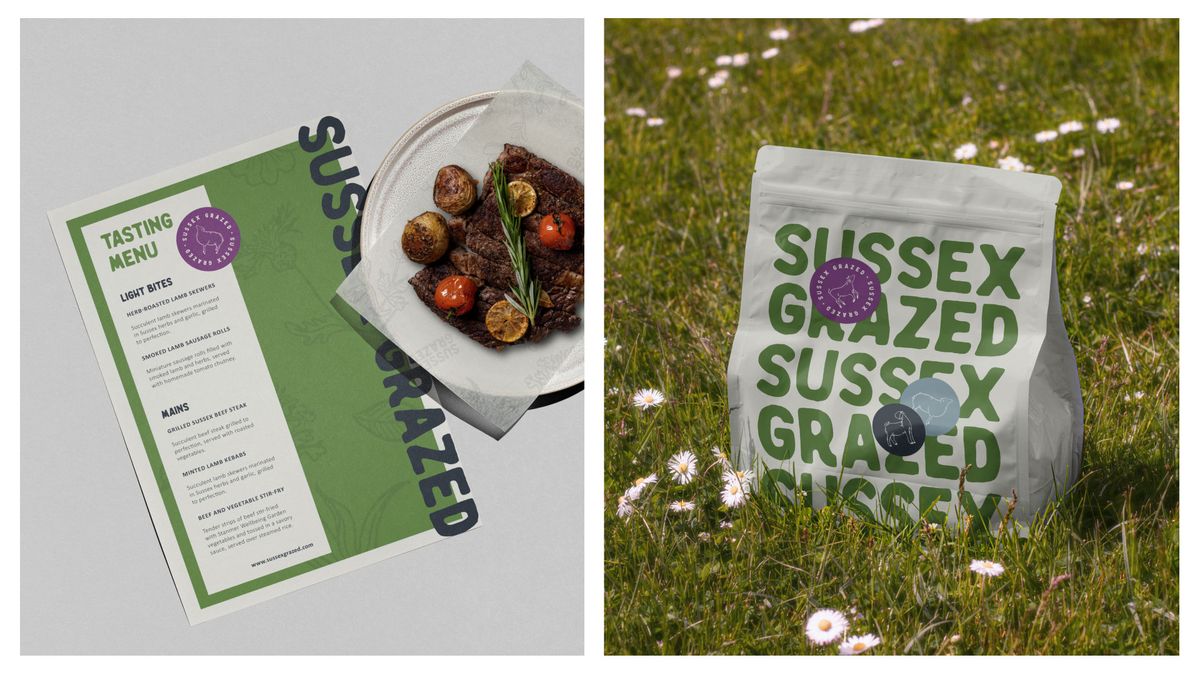
So we treated a conservation grazing scheme the way we'd treat any brand worth caring about. We gave it the look and the language of restaurant-quality food, because that's what it is. The work the team had already done made that easy to believe: a supply chain shortened to the last working abattoir in Sussex, which cuts the food miles and, more to the point, the stress on the animals. A pilot that had grown into something people come back to, season after season, now stretching to goat and wild venison. We made sure it looked as good as it was.
The numbers around it are real, and they're large. The South Downs National Park is working to turn 13,000 hectares into wildlife habitat by 2030. More than 6,000 are already there, an area bigger than Portsmouth. Sussex Grazed is one of the commercial engines underneath that target, alongside 50,000 trees and 100 hectares of wildflower planted across the region.
The thinking has travelled, too. In January, project coordinator Georgina Cockett took it to the Oxford Real Farming Conference and into the pages of The Times, making the case for venison and for deer management as part of a serious local food system. The model is built to be copied. Use the Open Food Network, take the financial risk off the farmer, and you have something any National Park in the country could run.
Jarvis Smith, who founded the PEA Awards, put the whole philosophy better than we could: you can't lecture people into changing the world, you have to show them it's already happening. That's the entire idea behind Sussex Grazed. Nobody is being told to care. They're being offered something good, and the caring comes built in.
Winners are announced on 22 June at One Marylebone, during London Climate Action Week.
We'd love to win. But the project already proved the point that interests us most: change doesn't come from asking people to want less. It comes from making the better thing the one they actually want.