Change Management
The Brief
Change stalls when the people leading it are afraid of it
Change at Smiths only lands if leaders carry it, and leaders are human. Faced with something that looks huge, many resist, hesitate or wait for instructions. When that happens, strategy stays on paper and teams fill the silence with their own fears. Smiths needed leaders who would choose to lead change, not just endure it.
The Solution
Nobody beats a game in one go. You play it level by level
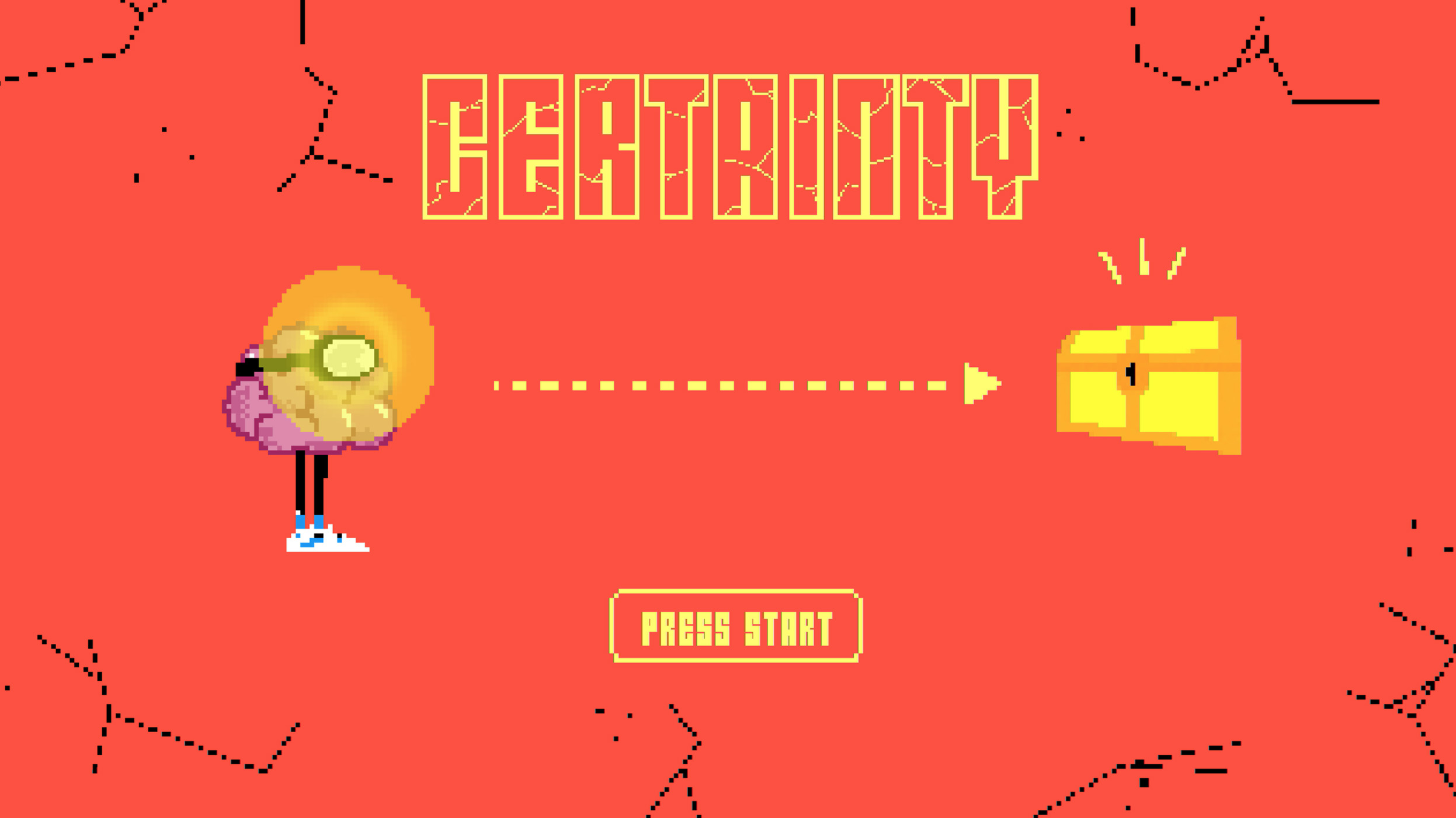
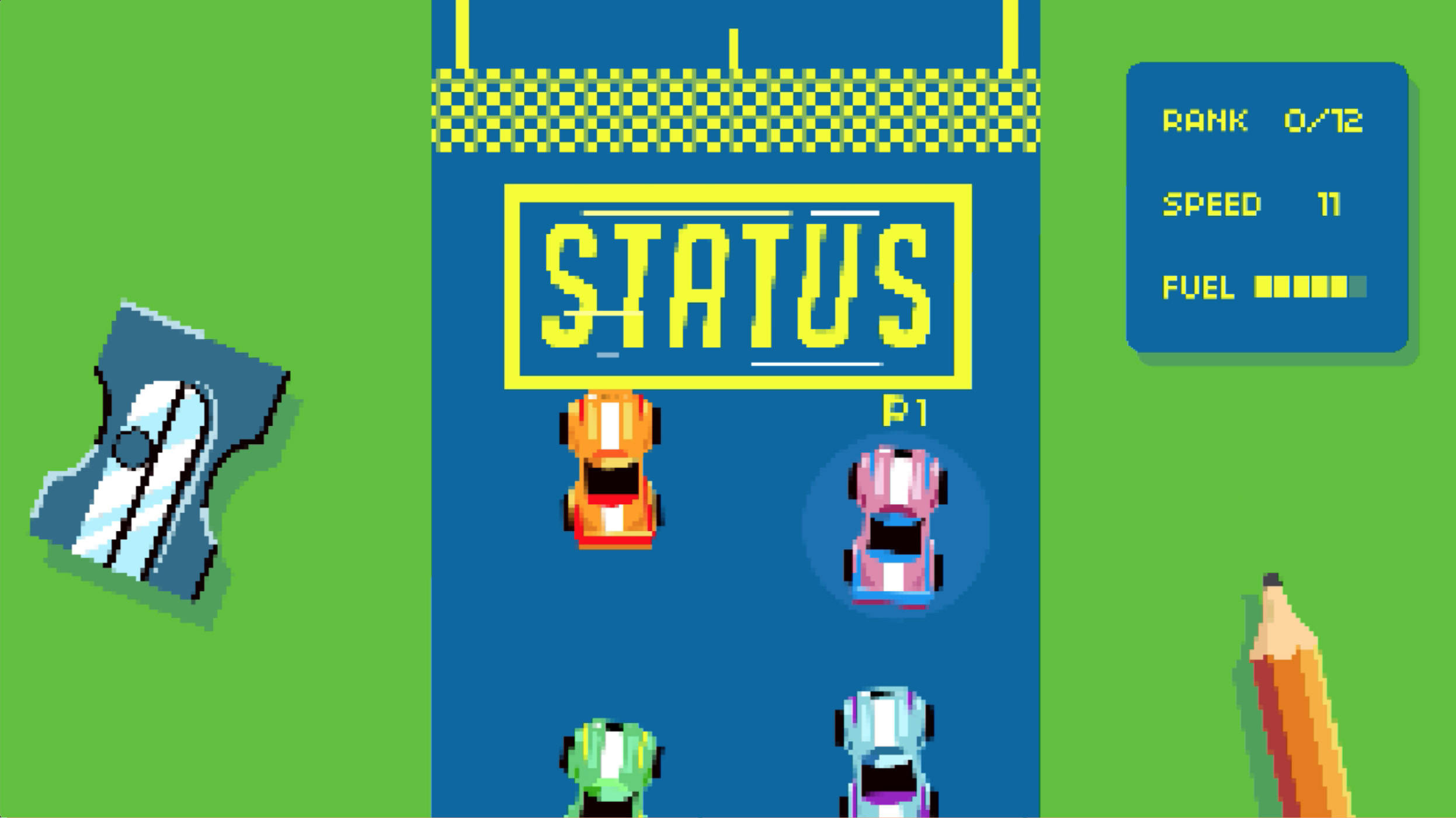
We reimagined change as an old school video game. A short 8-bit motion graphics film breaks one overwhelming challenge into levels, each one beatable, each one played as a team. Supporting tip sheets give leaders the moves to use the next day. Lightweight, multilingual and built for busy leaders.
Change Management — Course Introduction
Change runs through every leader in the business. Any one of them can stall it
Smiths is a large, global engineering business. Change there doesn’t travel by announcement. It travels through people: formal leaders with teams and titles, and informal ones whose opinion carries just as much weight.
If those leaders resist, or simply stay quiet, change slows at every layer. Teams read the hesitation, fear fills the gap and the business pays for a transformation that never quite arrives.
The usual response is a heavyweight change programme, full of models and process. Smiths wanted the opposite: something lightweight that could carry the key messages to leaders across the business, in their own languages.
The real barrier wasn’t knowledge. It was how big change feels when you’re the one standing in front of it.
Press Start
Our Approach
When the problem looks too big, change the way you look at it
We started with the feeling, not the framework. Leaders weren’t short of change models. They were looking at change as one massive, insurmountable hurdle, and nobody runs at a wall.
So we shifted the perspective. Anyone who grew up with a console knows how a game works. You don’t finish it in one sitting. You clear a level, learn something, and go again.
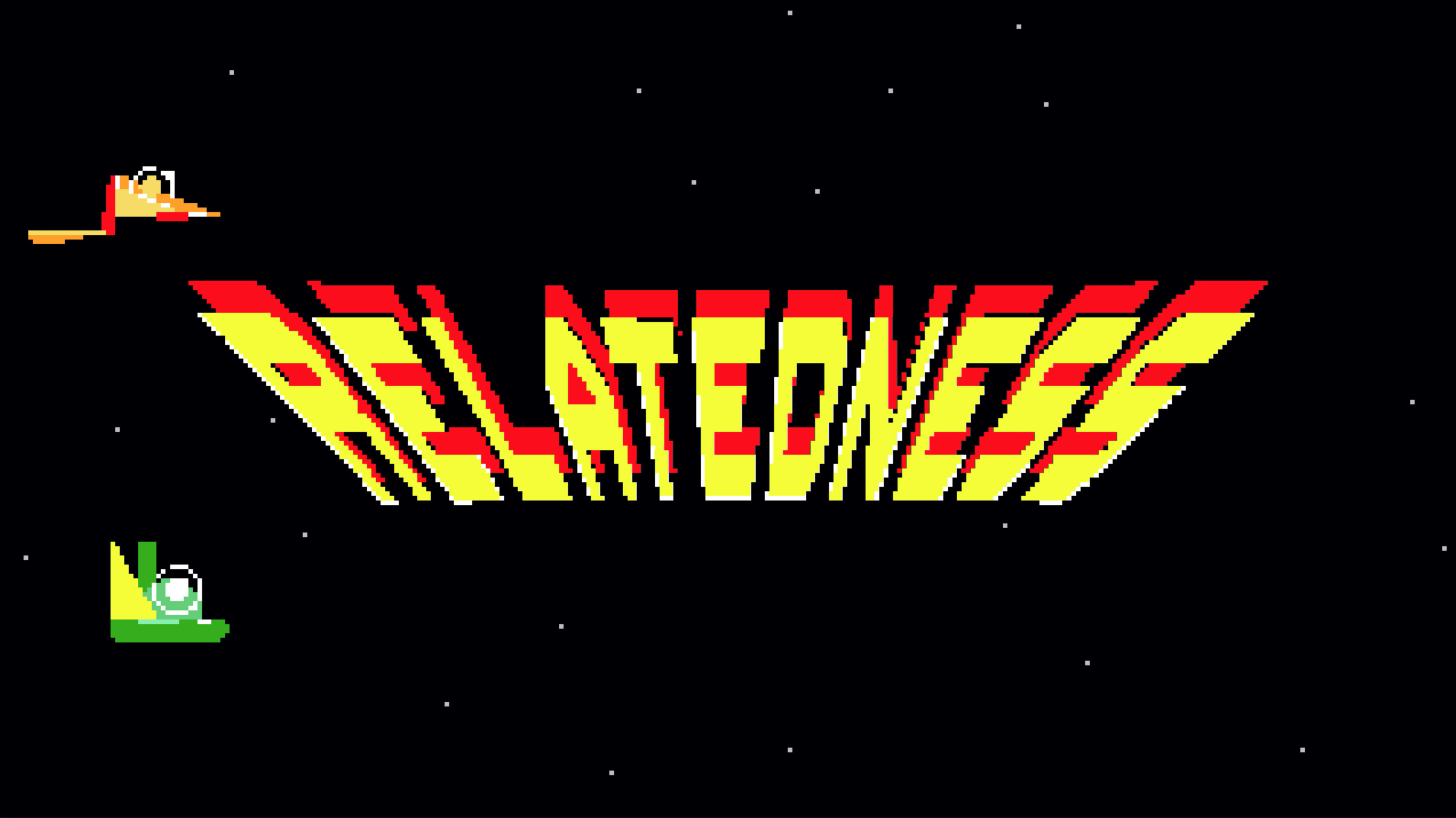
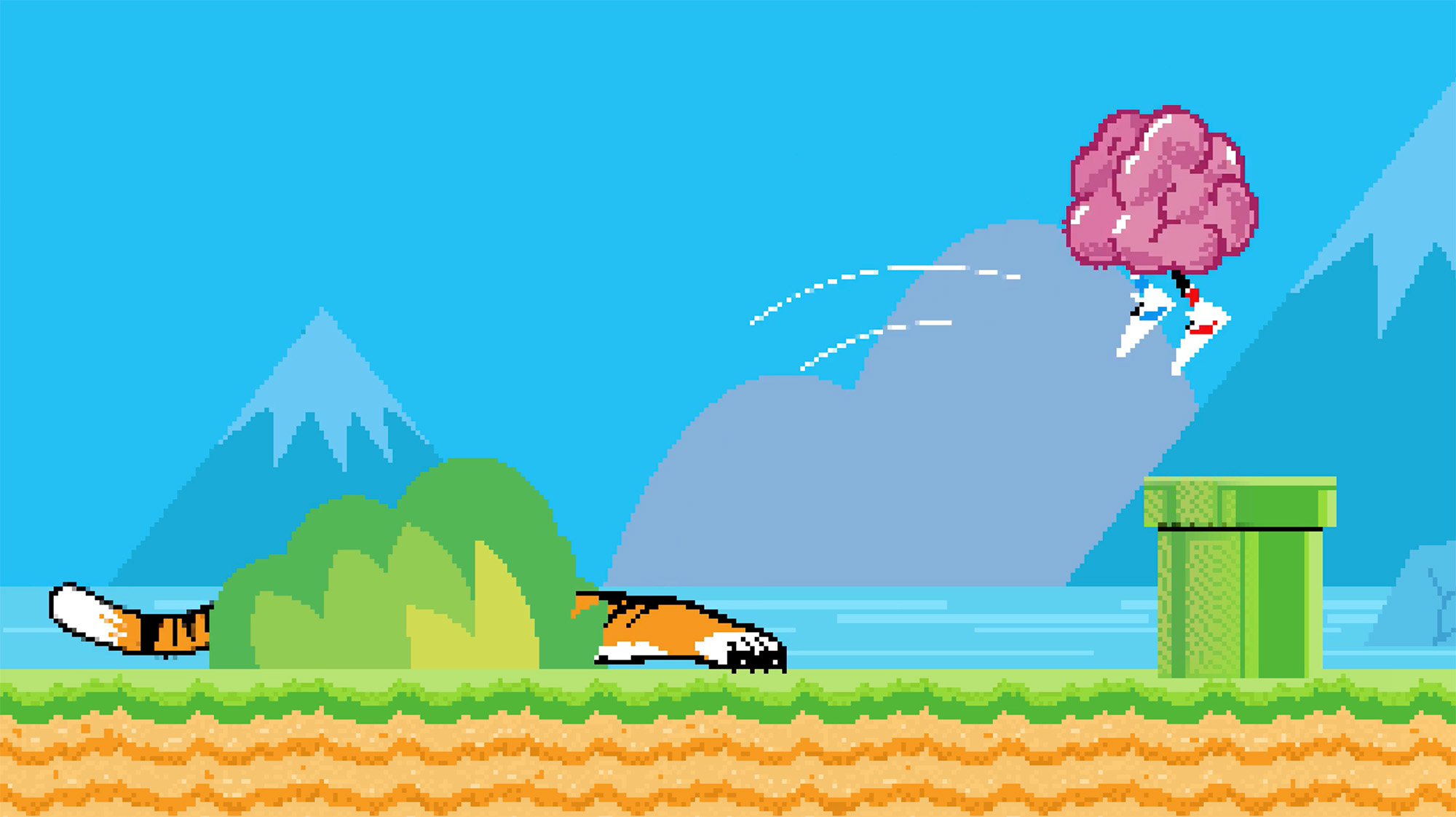
That became the idea. An 8-bit design treatment brings back childhood games and uses nostalgia to pull leaders in. On screen, change becomes a series of levels to clear together, never a boss fight to face alone.
We delivered it as a motion graphics film with supporting tip sheets, in multiple languages, so the same simple idea reached leaders wherever they worked.
The Levels
Key Project Assets
The Levels Concept
A single creative idea that reframes change as a game played level by level, giving leaders a simple mental model for breaking a daunting transformation into steps they can actually take.
8-Bit Motion Graphics Film
A short animated film in a retro video game style, using nostalgia to disarm resistance and show change as something a team overcomes together, one level at a time.
Leader Tip Sheets
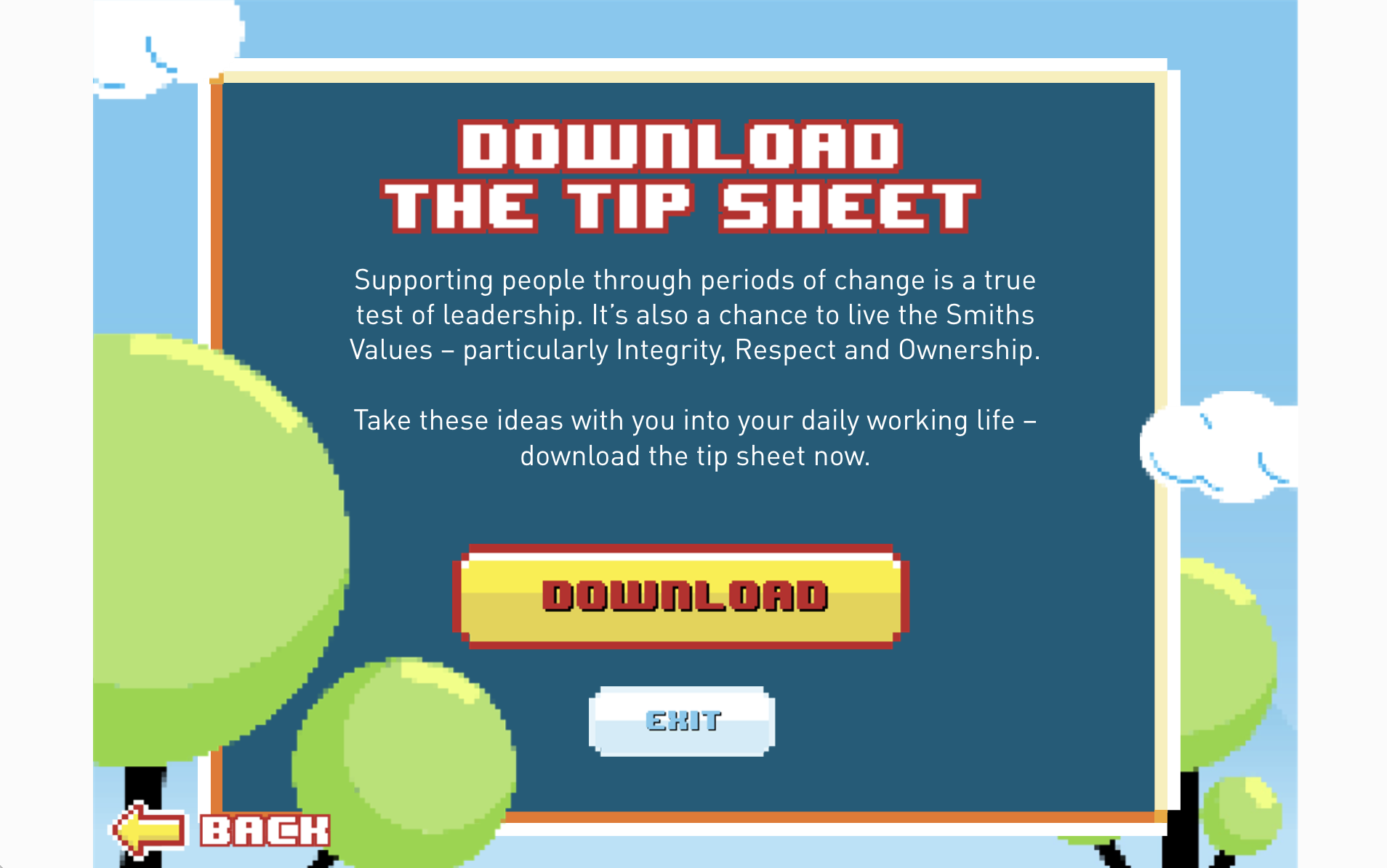
Practical companion sheets that turn the film’s idea into action, giving formal and informal leaders clear prompts for communicating change and supporting their teams through it.
Multilingual Versions
The film and tip sheets produced in multiple languages, so leaders across Smiths’ global business received the same message with the same clarity, in the language they work in.
Impact
Smiths’ leaders got a way of thinking about change they could hold in their heads and pass on to their teams: break it down, play it together, clear the next level.
The Levels
Project Insights
From insurmountable hurdle to next level
Resistance to change is rarely about the change. It’s about scale. Show people the whole mountain and they freeze. Show them the next level and they pick up the controller. The content didn’t get simpler. The way of seeing it did.
It’s also proof that serious subjects don’t need heavy treatment. An 8-bit game is about as far from a change management framework as you can get. That distance is the point. Nostalgia opens the door. The idea walks through it.
When the world gets a bit too complex, look at it differently. Nobody finishes a game in one go. You clear a level, then the next, and you do it together. We wanted leaders to see change the same way.
Paul Mallaghan, We Are Tilt