Networking Power Animal
The Brief
Provoke curiosity about a skill a whole workforce had written off.
At BP, the people who built networks were the people who got on. Yet networking was widely misunderstood: a gift for extroverts, a chore for the rest, something to dodge rather than learn. Left alone, progression would keep flowing to the few who were already good at it. BP needed everyone else in the game.
The Solution
Pigeon-hole the entire workforce. Give them a reason to love it.
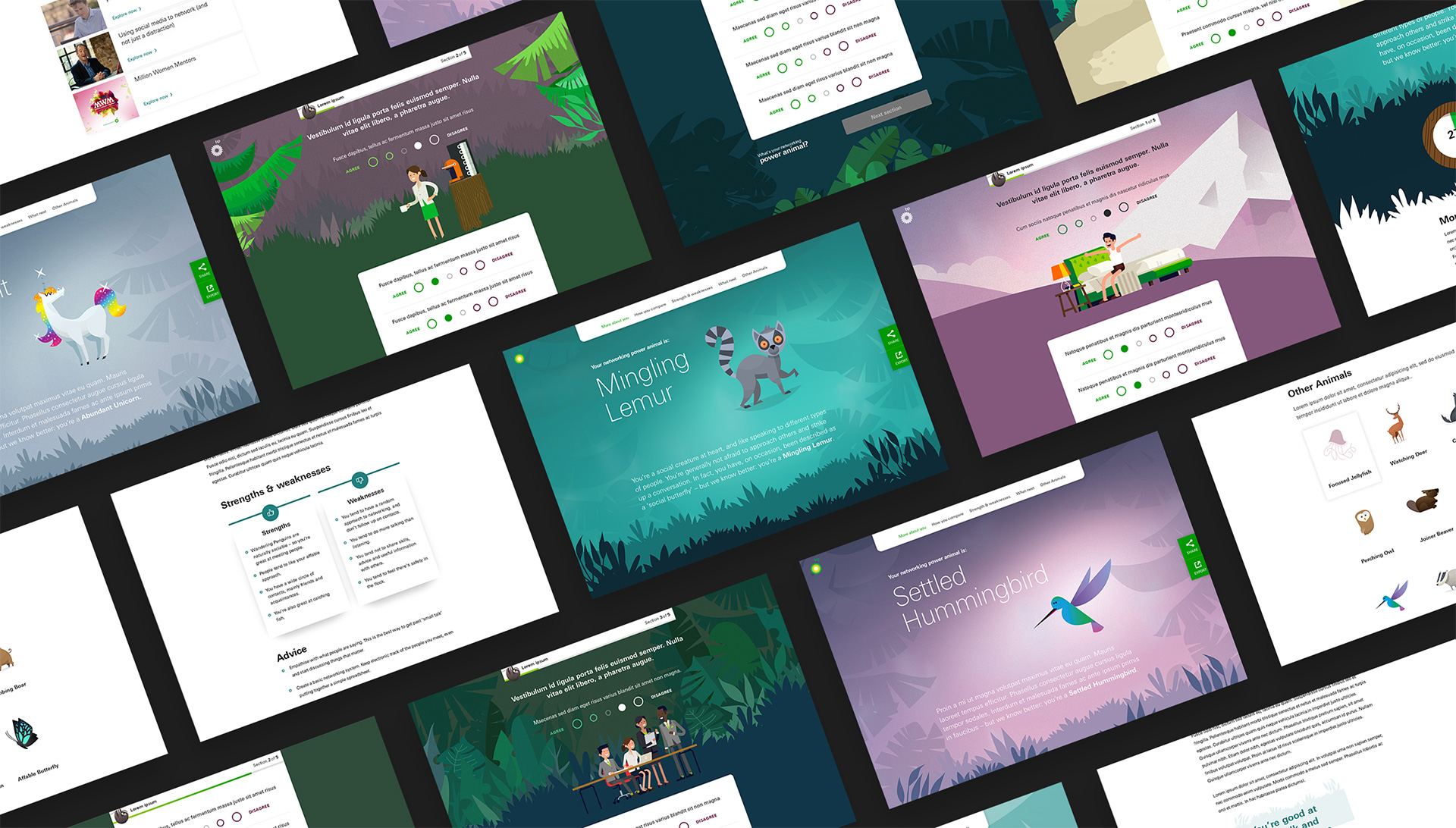
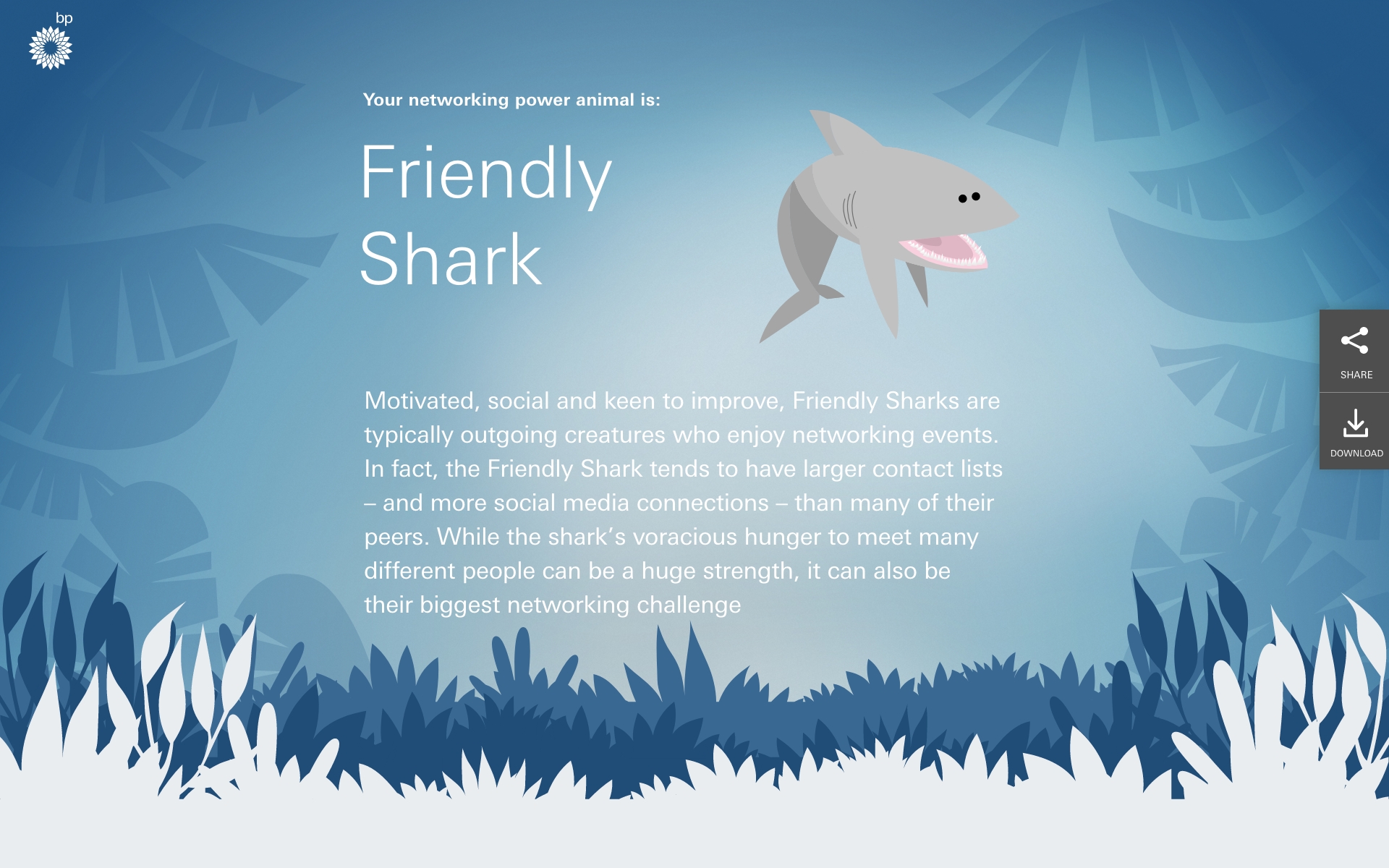
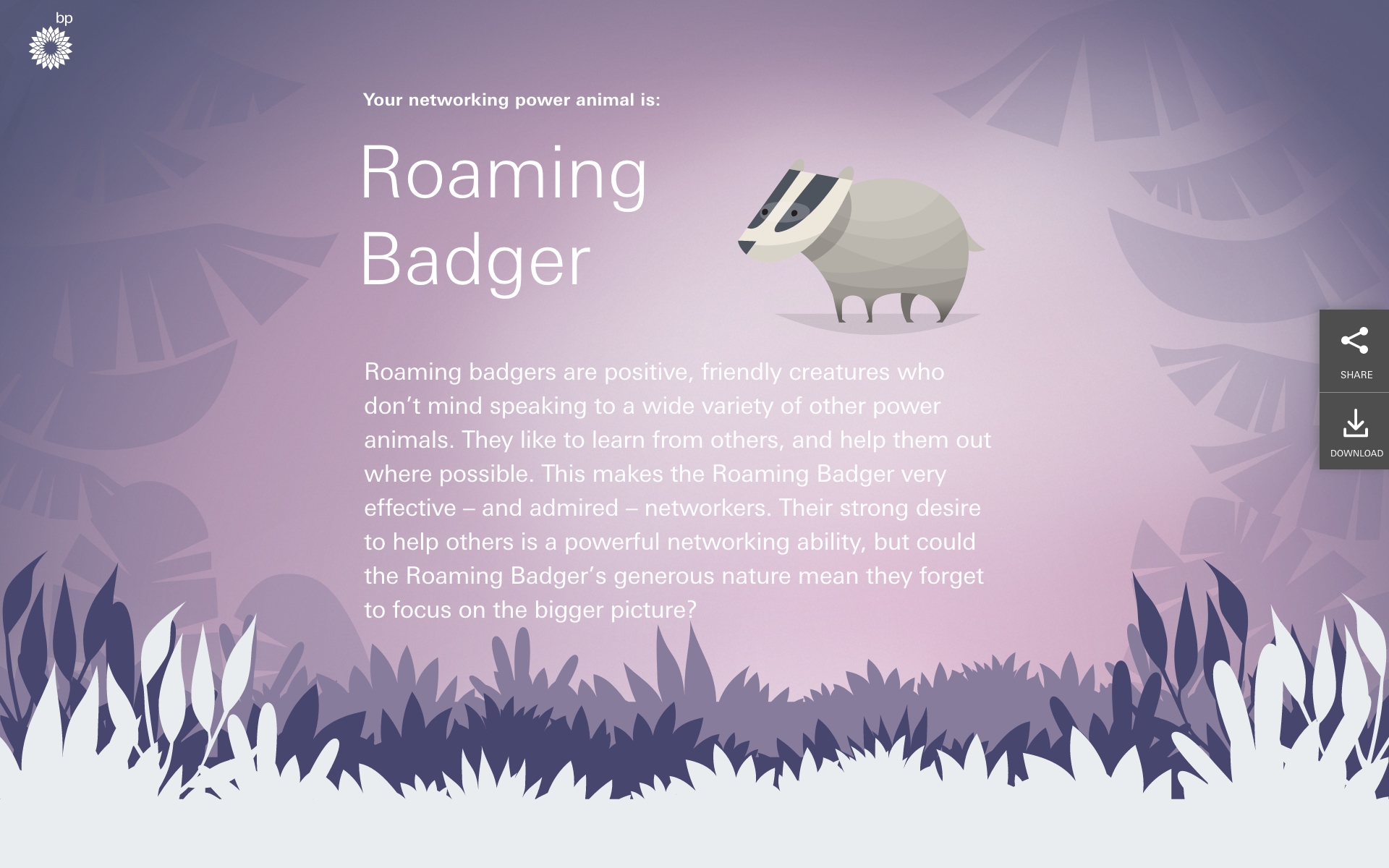
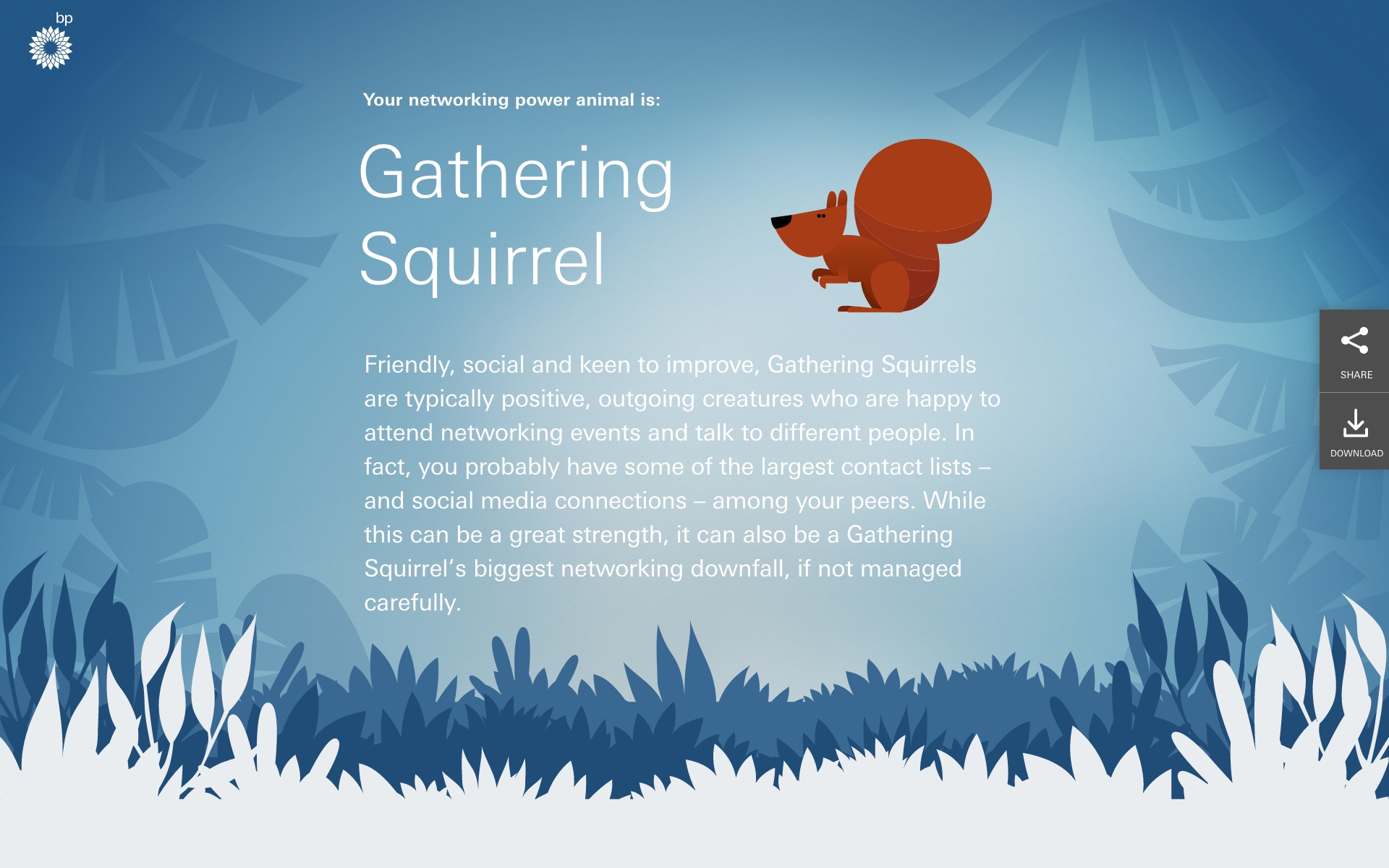
A diagnostic that sorts people into one of sixteen networking types, each with its own animal: Gathering Squirrels, Roaming Boars, Abundant Unicorns. Fifty-odd questions, one algorithm, and a full profile of how you network, how others do, and what to do about it. Part personality quiz, part behavioural insight. The hook was irresistible. The depth made it stick.
The people who networked got on. Everyone else was waiting to be noticed.
BP employs tens of thousands of people across dozens of countries and disciplines. At that scale, who you know shapes what you work on, who hears about you, and how fast you move.
Inside BP the pattern was no secret. Build a network and you did well. But networking carried baggage: forced small talk, name badges, a skill for salespeople. The quiet consequence was a talent pipeline that rewarded a narrow slice of personalities and overlooked the rest.
Earlier efforts to get networking onto people’s development agenda had run out of steam. Nobody was going to be sent on a networking course, and few would volunteer for one. Whatever came next couldn’t be mandated. It had to be wanted.
Our Approach
The fun of a throwaway quiz. The structure of Myers‑Briggs.
We started with a human truth: people say they hate being pigeon-holed, yet most of us secretly love being defined. Every ‘which character are you?’ quiz proves it. So does Myers‑Briggs. So does 16Personalities. The fun ones tell you nothing. The serious ones never mention networking.
We took the best of both. The structure echoes Myers‑Briggs: four patterns of networking behaviour, sixteen types, an algorithm doing the sorting. Over fifty questions in, you get a full profile: where you shine, where you hide, how the people around you differ, and what to do about it.
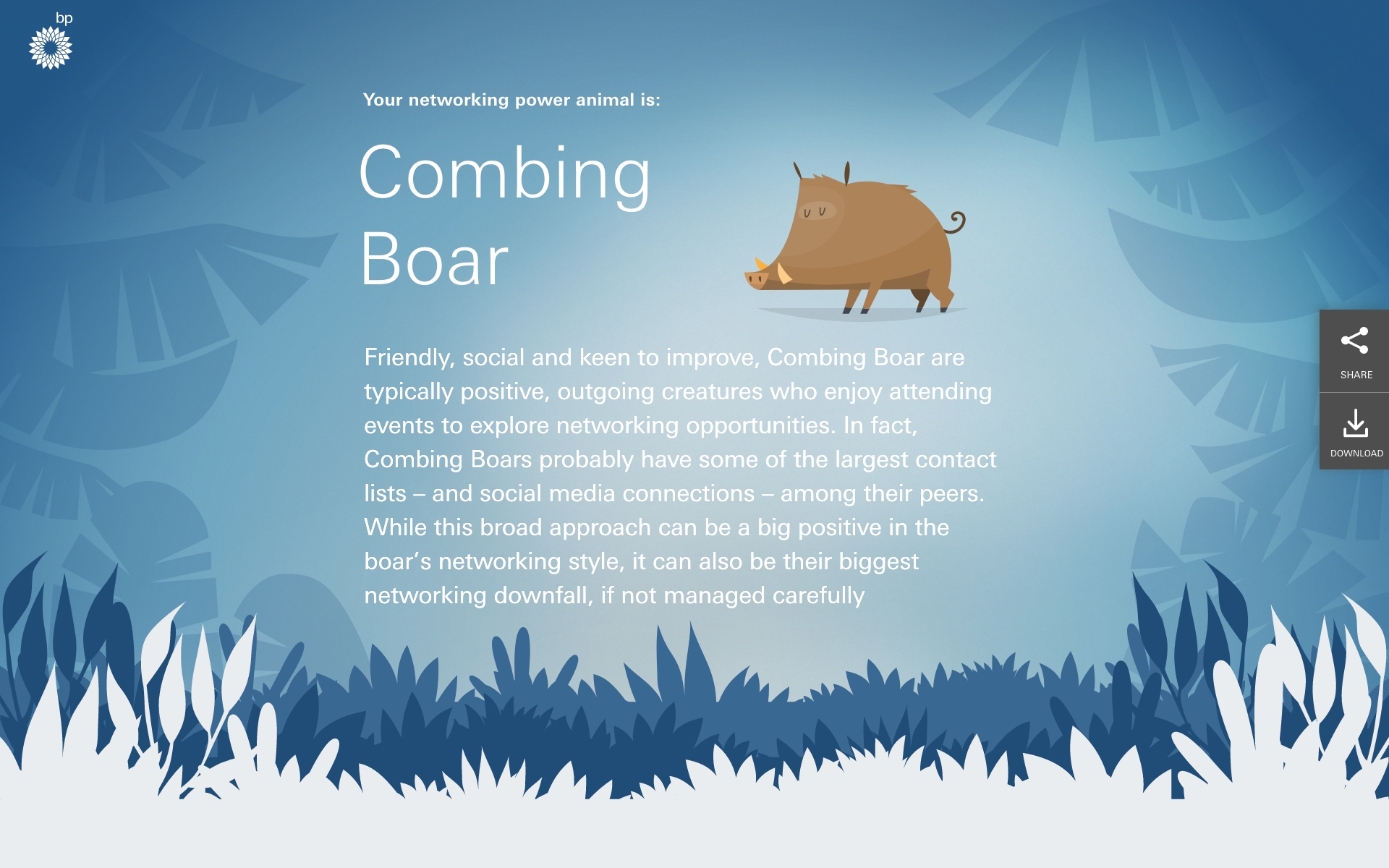
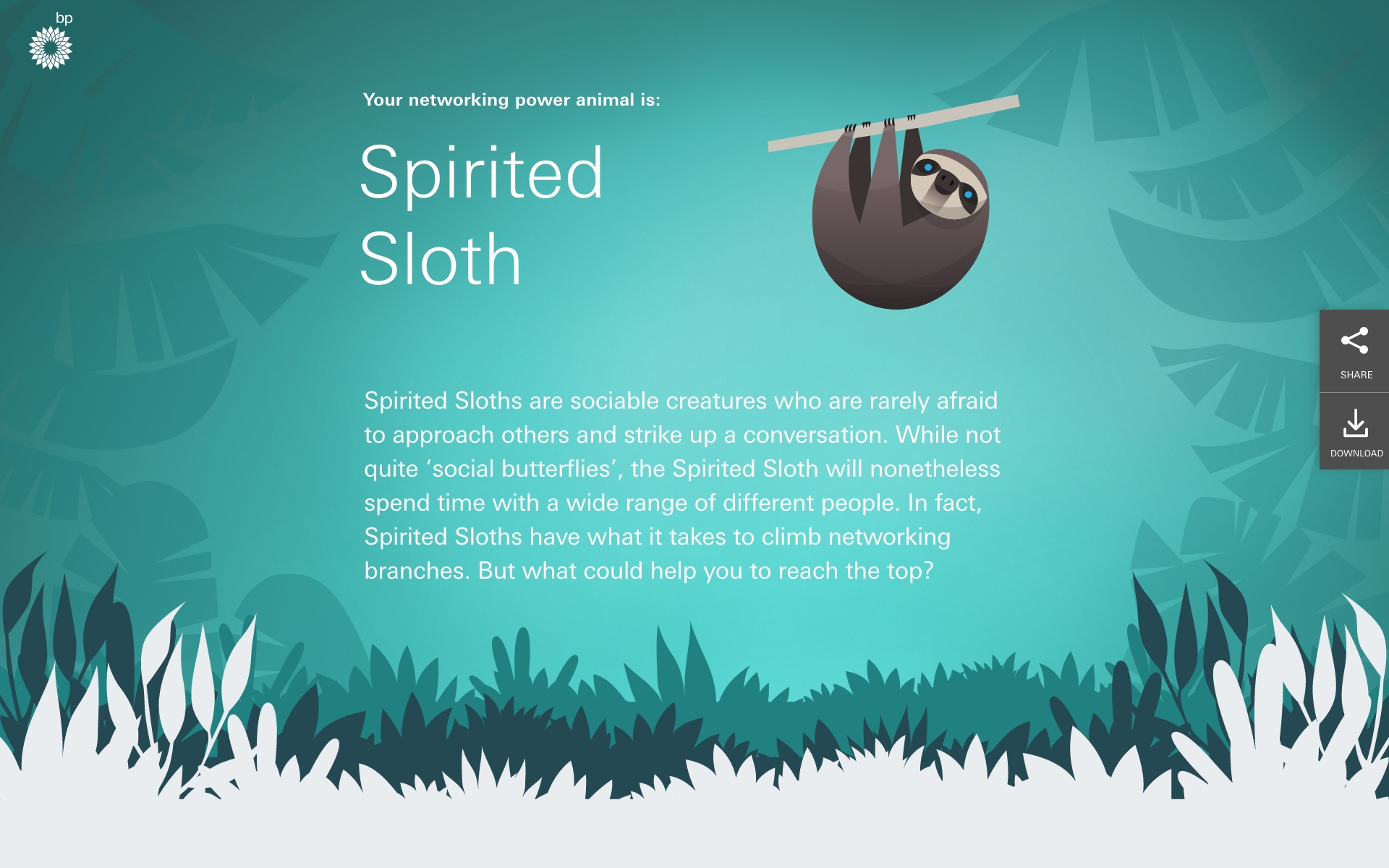
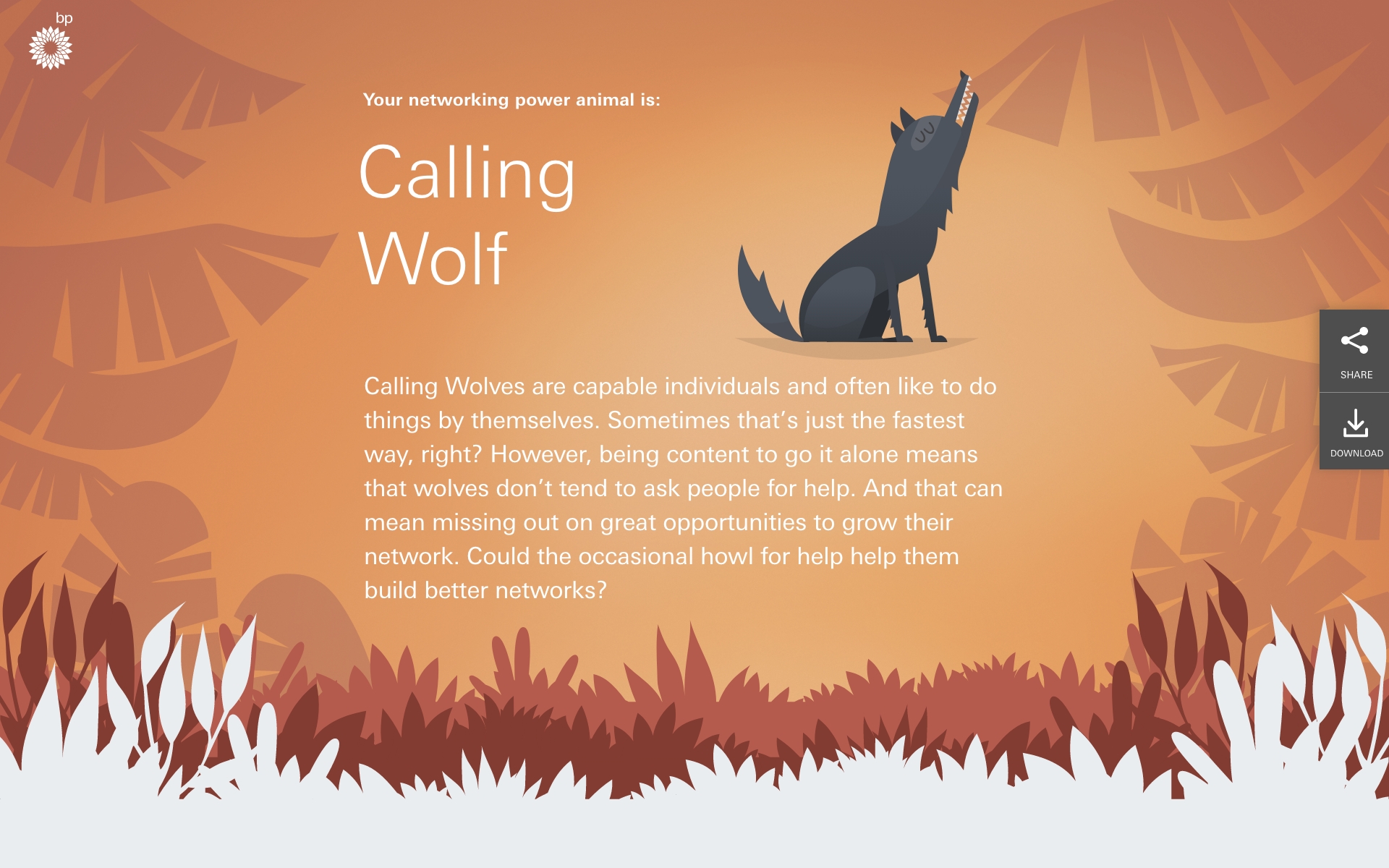
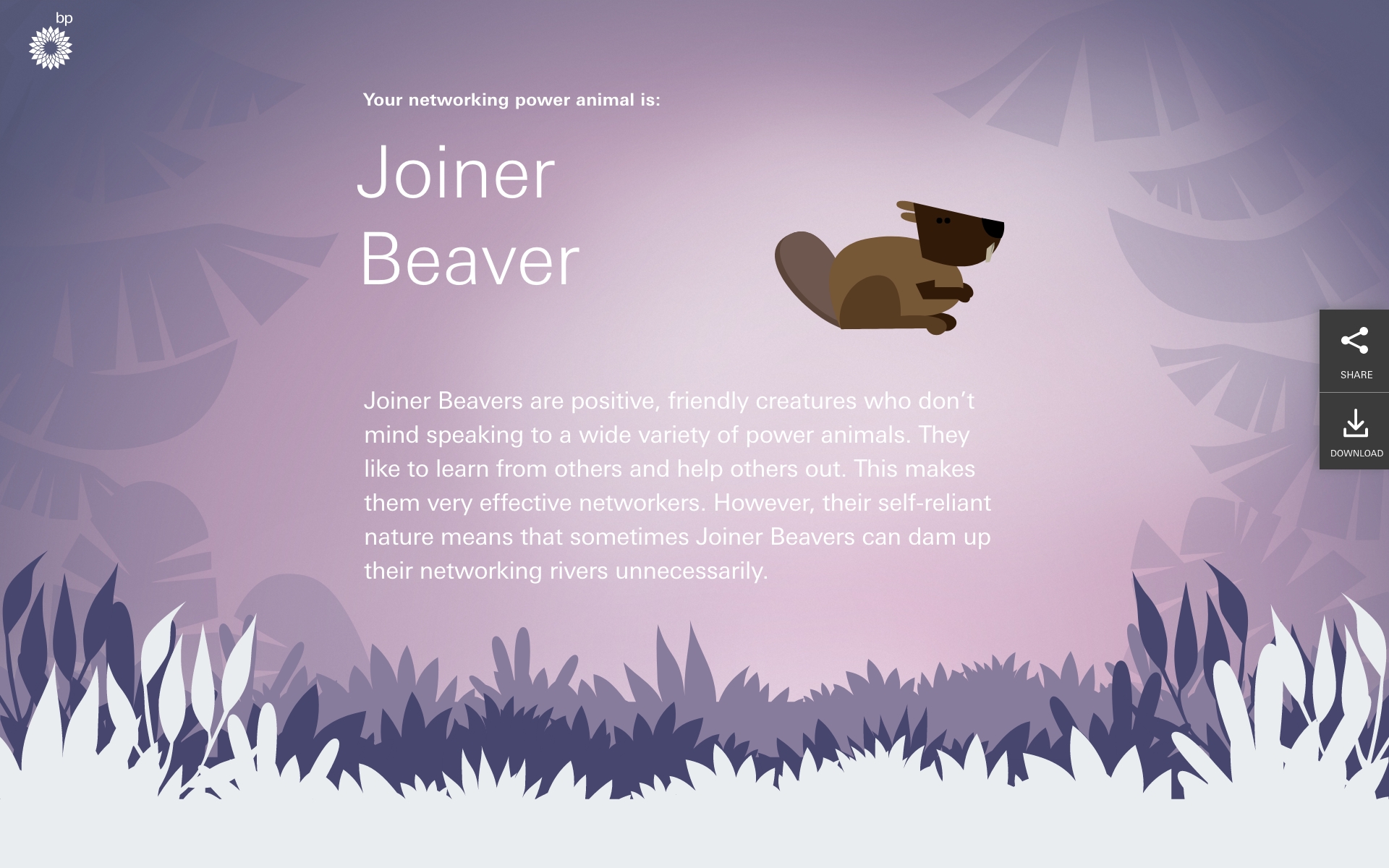
Then we gave each type an animal. Gathering Squirrels. Roaming Boars. Abundant Unicorns. Each with its own qualities and blind spots. The animals did the rest: people wanted the answer, then wanted to tell everyone they knew.
Key Project Assets
Networking Power Animal Diagnostic
An algorithm-backed assessment of more than fifty questions that sorts every participant into one of sixteen networking types, each with its own animal, strengths and practical advice for improving.
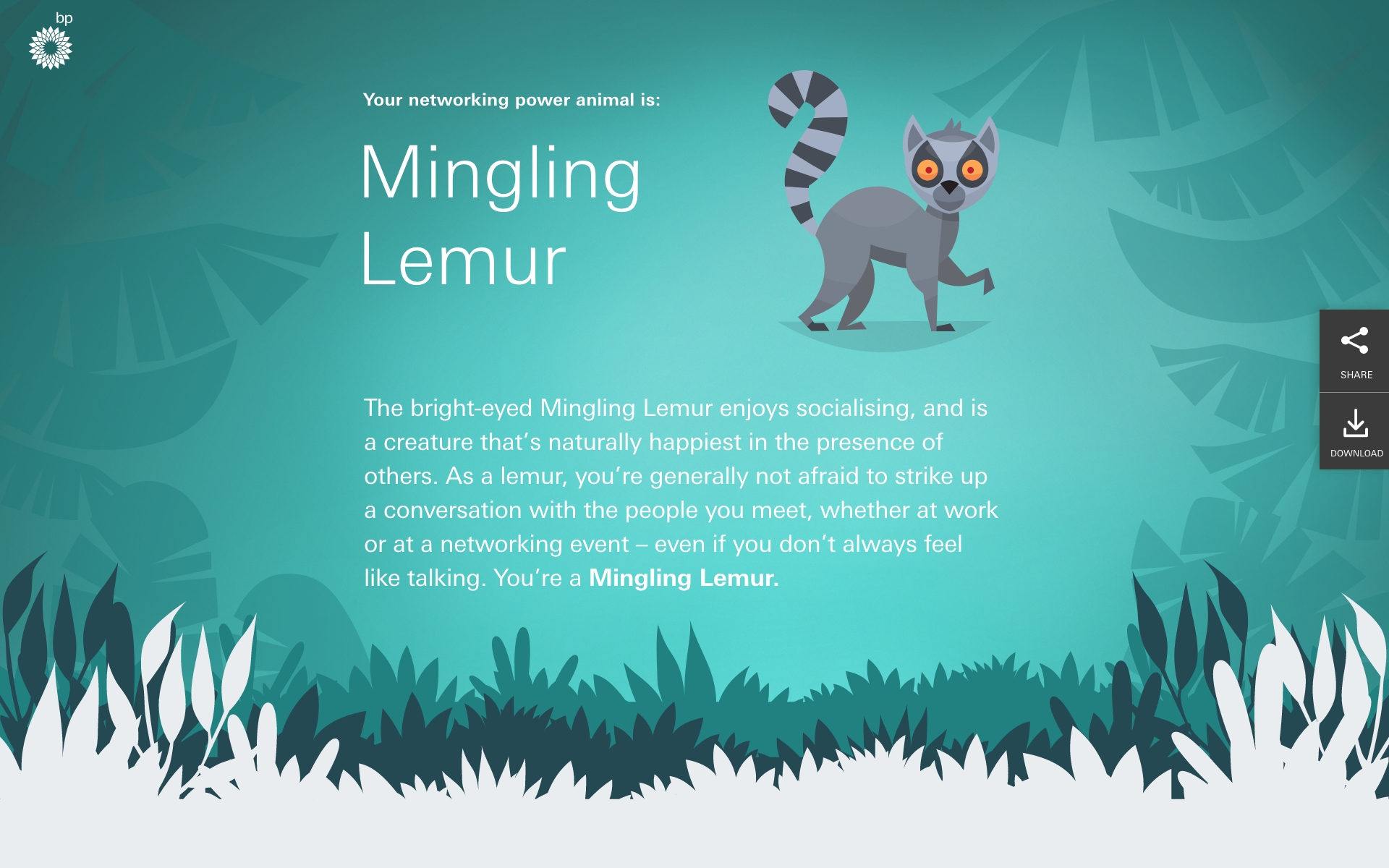
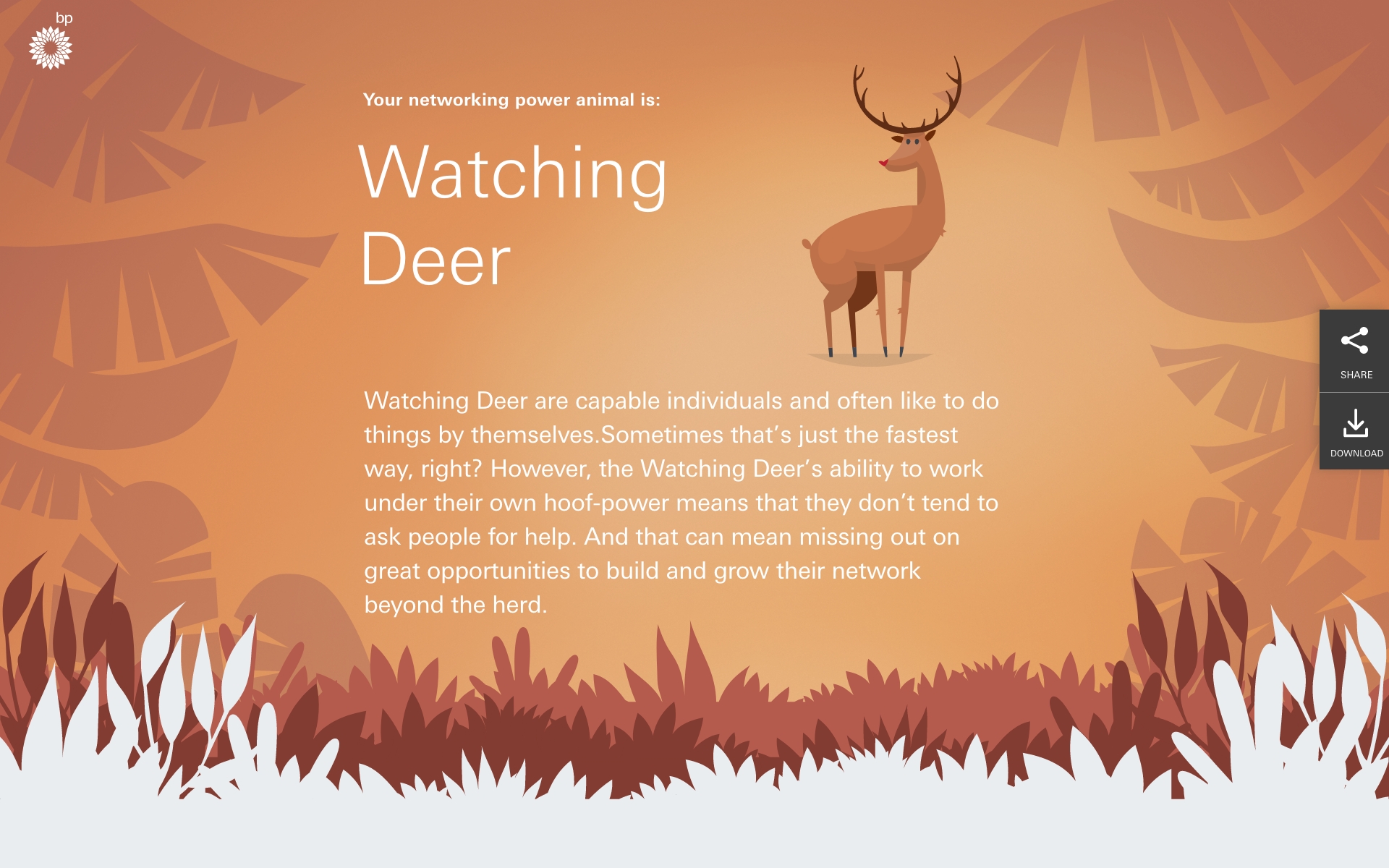
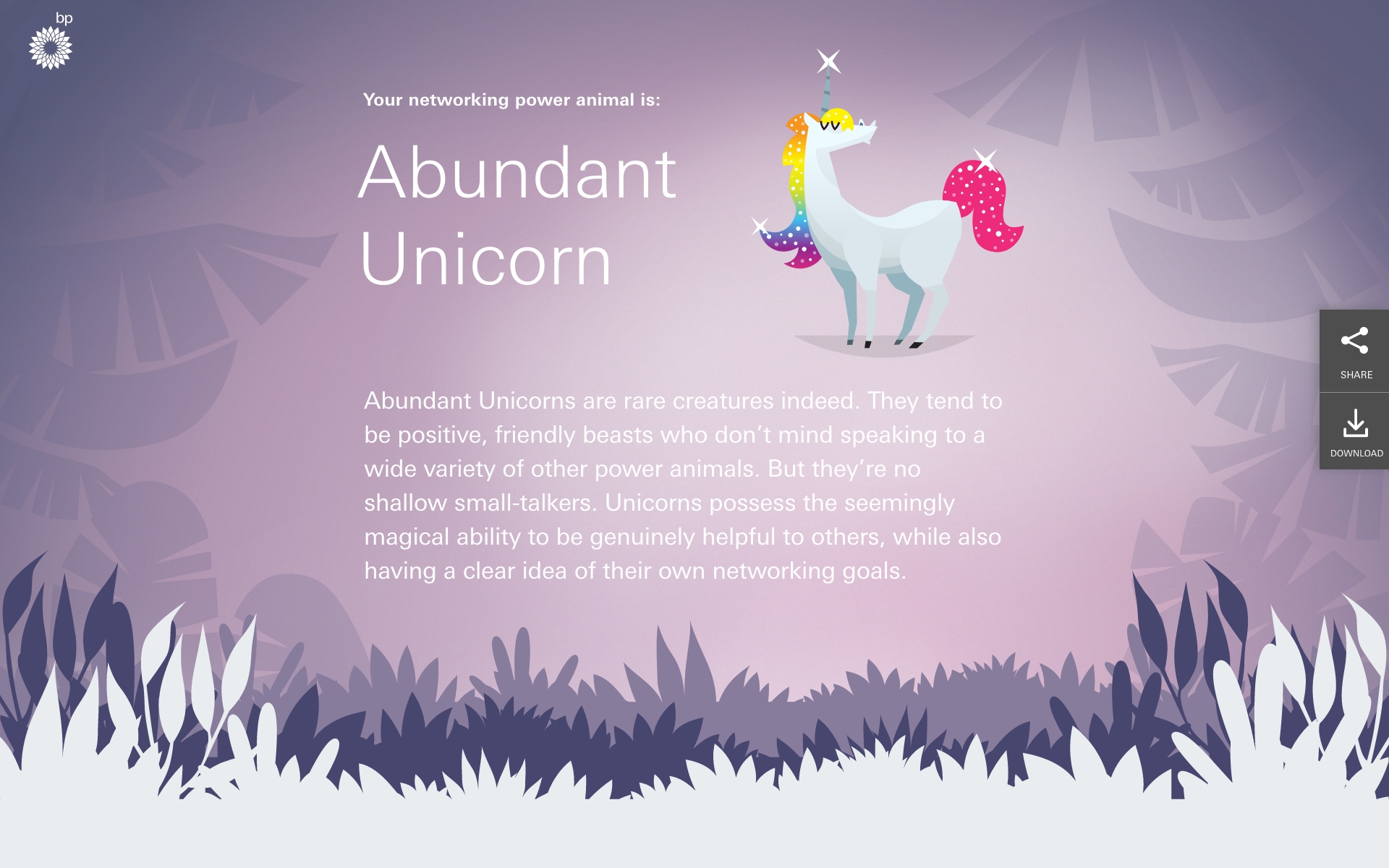
Sixteen Power Animal Profiles
Detailed profiles for every networking type, from Gathering Squirrel to Abundant Unicorn, pairing personality insight with practical steps and written to be compared, shared and argued over with colleagues.
Four-Pattern Behavioural Framework
The underlying model of four networking behaviour patterns that gives the animals their substance, turning a quiz into a shared language for how people connect, collaborate and get things done.
Power Animal Avatars
A set of animal badges for every type that colleagues adopted as email signature avatars, tribe markers on Yammer and meeting icebreakers, giving the experience a visual life well beyond the quiz.
Impact
The experience became the most-engaged piece of content in BP’s history. It spread on its own, badge by badge, until finding your animal became part of how BP talked to itself.
Project Insights
From avoidance to allegiance
The most effective learning rarely announces itself as learning. Nobody at BP set out to learn networking. They found out they were a Roaming Boar, messaged three colleagues to compare, and joined a tribe. That is networking. They just didn’t call it that.
Ten thousand people, every one of them a volunteer. The behaviour the experience set out to teach was the behaviour it generated, all by itself. When learning is something people want to tell each other about, it doesn’t need to be compulsory. It needs to be irresistible.
This is fantastic, it’s gone viral and now has a life of its own, with people using it for icebreakers at the start of meetings. Results have shown that this is the highest engaged piece of editorial content we have ever had.
MK, Learning Consultant — BP

