Nobody at your firm sets out to do the wrong thing. That's exactly how it starts.
It's ten past six on a Tuesday.
You're three months into the job and the partner you most want to impress stops by your desk with a client email open on his phone. The client wants a date changed on a document you drafted last week. Nothing dramatic. Just a date. "They're a good client," he says. "Sort it before you go, would you?" He's already walking away.
You know the date matters. You know what changing it would mean. You also know that nobody has ever said no to this partner and gone on to have a good year.
Stop there. Notice what just happened to your thinking. The rules didn't move. The room did.
Now follow the document. Tomorrow it lands with the client. They'll read it, rely on it, maybe sign something on the strength of it. They won't know about ten past six. They're simply assuming that the person who produced it did the right thing at every step, including the steps nobody saw, and handed them a 'thing' they can use in good faith.
That assumption is what your firm is actually selling. And I think it's about to become the only thing.
What clients are actually buying
If you run an expertise business, you sell knowledge. That's been the model for a century. People come to you because you know things they don't.
That's less true every month. Knowledge is everywhere now, for everyone, all at once, and a lot of it is good. A client can get a plausible answer to almost anything they used to pay you for before they've finished their morning coffee.
What they can't get is confidence that the answer is right. That the person behind it did the work properly, checked what needed checking, isn't conflicted, and would tell them if the honest answer was inconvenient. Nobody buys your advice. They buy the person who gave it, and the belief that the person could be trusted with what they knew.
Which makes trust the currency. And a culture of ethical working, the kind that holds at ten past six when the partner is already walking away, is how you earn it.
None of this is news to anyone, it's just rarely felt until it's too late. In 2023 a big four firm leaked confidential government tax information and ended up having to sell its Australian public sector business for a dollar. In 2024 a global consultancy paid $650m to settle a US criminal case over advice it gave an opioid manufacturer on boosting sales. Both firms survived, but the thing they were selling, trust in their people and belief in their expertise, didn't.
The regulators have noticed
They've started writing culture into the rules, not just conduct. The IESBA, which sets the ethics code accountants work to worldwide, is writing firm culture into the code itself, with a draft due in December. Its reasoning: ethical failures are rarely down to a shortage of rules. They come from what the firm is like to work in.
The SRA, which sets the rules and training requirements for every solicitor in England and Wales, has reached the same place. More than half of the 83,000 reports it's received since 2019 have been about ethics, professionalism and judgement. It looked at standard e-learning as the answer and rejected it, on the grounds that people complete it without engaging, let alone changing.
They're right about the problem, and I think they're about to be wrong about the fix, and for a reason I've written about before. Goodhart's Law says that when a measure becomes a target, it stops being a good measure. The SRA's proposal is three hours a year, in groups of no more than twelve, with a facilitator signing off that you actively took part. All of that is measurable, which is why it will be measured. Within two years the question in most firms won't be "did our people get better at this?" It'll be "have we logged everyone's three hours?" And once that's the question, the thing being logged stops mattering. The regulator will have built a new box, and the profession will tick it.
Hold on to that point for a moment.
Training nobody believes in
Most firms already have ethics training. It's mandatory, it's annual, but the people doing it don't believe in it. They click through it between real work, treating it as an irritant rather than something meaningful and useful. Some have found ways around it with answer sheets being passed round the office, and now AI, which will do the module for you (if you ask it) while you get on with the client work. Firms have already been fined for the first of those, and the second is only a matter of time. And trust, the thing the training was there to protect, took the hit either way.
If a programme can be gamed by the people it's for, it was only ever measuring completion. The SRA worked this out too, which is why it turned the online course down.
AI is taking the friction out of doing the wrong thing
AI gets talked about as a productivity story, but in my view it's also an ethics story, and not a comfortable one. You can't, and shouldn't, call yourself AI fluent without also being ethically fluent.
The pressure across professional services right now is to move faster with fewer people, and AI makes that possible. It also makes it very easy to accept the output because checking it properly would take an hour you don't have, or to stay quiet about the thing you noticed because the deadline is real and the doubt is vague. None of this makes anyone unethical. It removes friction from decisions that used to have some, but that friction was doing more work than most of us realised.
The technology commoditising knowledge is the same technology making trust harder to earn and easier to loose. Both trends point the same way, at workplace culture.
It never feels that bad at the time
You’re back at your desk at ten past six. You weren't short of information. You could recite the rule. What you were short of was room to think.
That's how these ethical missteps actually happen. Almost nobody sets out to do something wrong. What happens is a small allowance. A bend of a rule that everyone bends. A blind eye to something that's ‘probably’ fine. In the moment, under pressure, the ethical weight of it just isn't there. Psychologists call this ethical fading, and it's a good name, because that's exactly what it feels like. The ethics part of the decision fades out of view and it becomes a practical question about a deadline, a deal, or a document.
Then you rationalise it afterwards. The next decision becomes a bit easier to accept. None of the individual steps are big, but together they compound. It's ethical death by a thousand cuts.
Rules don't help much here, because in the moment it doesn't feel like a rules situation. It feels like a Tuesday.
Put people in the room before it counts
If the problem is the situation, then the useful thing ethics learning can do is put people in that situation before it counts. Let them feel how reasonable the wrong option sounds when it comes from someone they like and respect. Let them notice how quickly they start looking for reasons to say yes.
You've just done it. A short story at the top of this piece, and you felt the pull. You probably also noticed the point where you'd have said something, or where you'd have let it go.
Stories are the best way we've found to do this because they can act as a rehearsal for real life scenarios. You watch someone get leaned on. Months later someone leans on you the same way, and you recognise it. That recognition gives you a moment to think, which is often all the difference between going along with the room and doing what you know is right. We know, because we've done it.
What it looked like when we did it
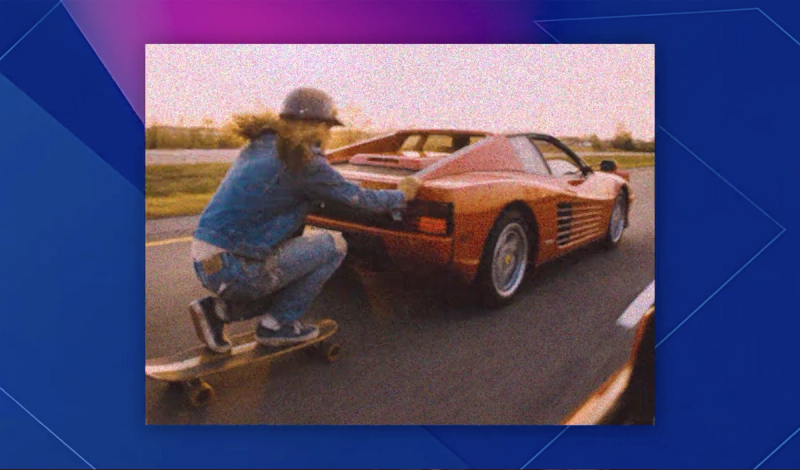
A few years ago a global professional services firm came to us with ethics training that everyone completed and nobody remembered. We made them a drama series instead.
It took a client brave enough to fund a season before they'd seen one work, months of pre-production, and scripts that had to survive legal and compliance review in every country they'd play in. Drama is harder to sign off than a slide deck. That's partly why nobody does it.
Professional actors, real moral grey areas and no tidy answers. A young consultant asked for a favour by a client who could shape his career. A secret deal that puts a friendship on the line. After each episode, the firm's own senior ethics leaders sat down on camera and picked it apart.
It went out to around 470,000 people in 150 countries and scored 4.7 out of 5. People set up watch parties. Debated it on Reddit. Enquiries to the firm's ethics advisers went up, and that's the number I'd point to, because it's behaviour rather than a rating. Season four is being filmed because people keep asking when the next one is coming.
I've never heard anyone ask when the next compliance module is out. Have you?
Back to ten past six
The partner's at the door. The client's a good client. It's just a date.
If your people have been here before, they'll know what this is. If they haven't, no amount of the usual training will help them.
You can't train someone for a moment they've never been in. But you can take them there first.
It doesn't have to be a drama series. It has to be a moment your people can recognise later, and it can sit inside the mandatory training you already have to run, logged and counted like everything else. The difference is that this time they'll remember it.
If you're working out how to build a culture of ethics at your firm, or you've got training that gets completed and forgotten, we'd like to talk.