Leading Change
The Brief
An industry in upheaval. A fifth of the workforce asked to lead through it
Lloyd’s Register was rebuilding itself around digitisation and decarbonisation, and its People Leaders, a fifth of the global workforce, were the ones expected to carry their teams through. Most had never been shown how. When change is led badly, people dig in, disengage or leave. LR couldn’t afford any of the three.
The Solution
Change is personal. So the learning had to be too
A narrative-driven learning experience set in the same futuristic world as The Legacy, built on three pillars: It Starts with You, Discuss and Track, Empower. Five fictional team members, each responding to change differently, challenge leaders to apply the SCARF Model in the moment, with reflective spaces and team-specific resources to take back to their own people.
Halve emissions by 2030. Automate operations. Keep every team onside
Lloyd’s Register has spent two centuries keeping ships safe and compliant. Now the industry it certifies is being rebuilt. Digitisation is automating how the business runs, and LR has pledged to halve its CO2 emissions by 2030. Neither happens unless people change.
That change lands on People Leaders. They sit between the executive and the core team, and every strategy depends on them. Get the human side wrong and the cost is resistance, disengagement and attrition, just as LR was fighting to keep expertise in the building.
Standard change guidance treats change in the abstract, as if every team reacts the same way. They don’t. Leaders needed something built for the people they actually run.
We’d already built a world for LR’s People Leaders with The Legacy. Time to go back.
Our Approach
Start with the leader. Then meet the team, one reaction at a time
Our Creative Strategist, Chinelo, built the experience on a narrative model with three pillars. It Starts with You asks leaders to notice how they themselves respond to change before they try to steer anyone else’s response.
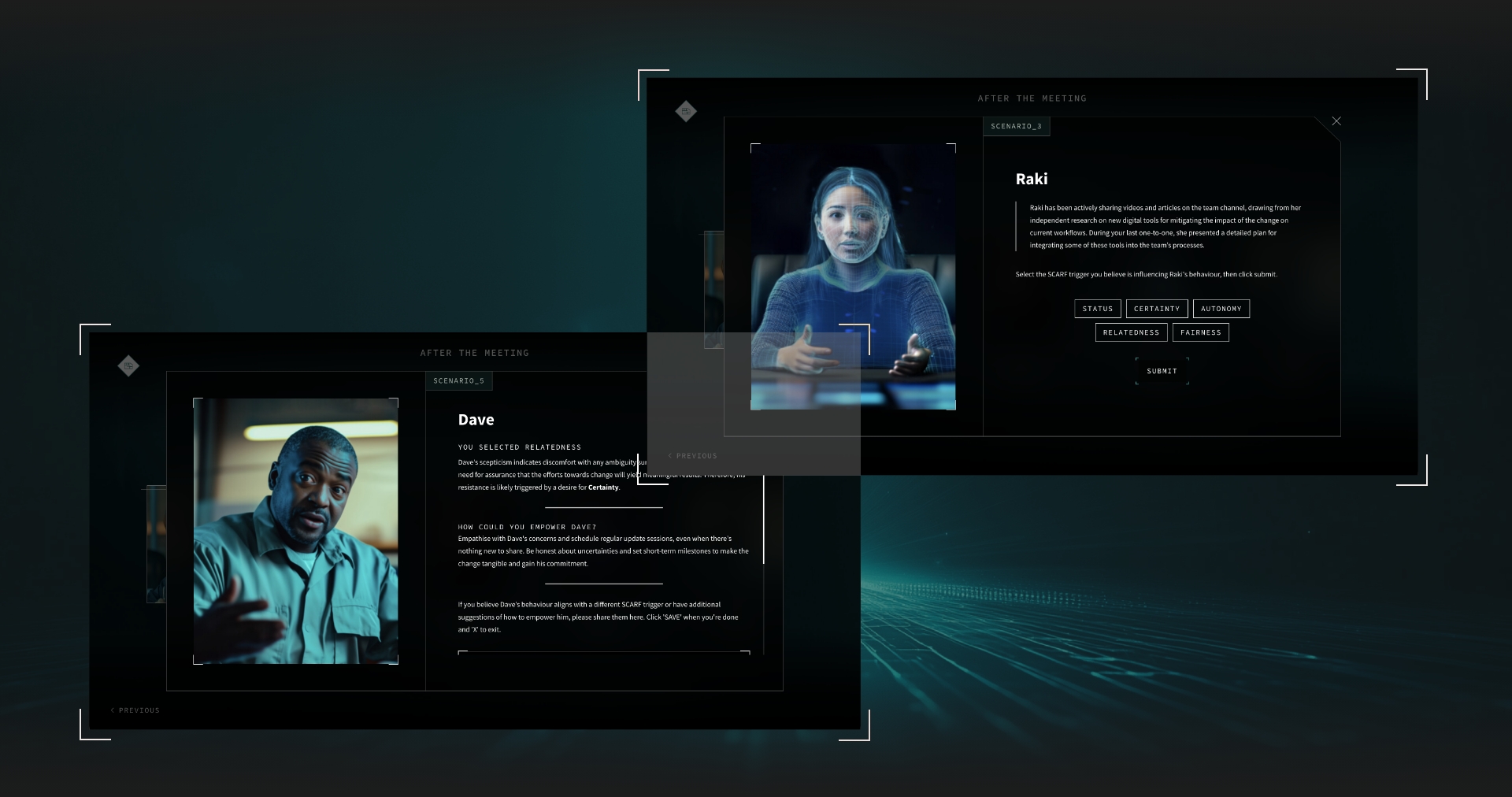
Discuss and Track moves to the team: how to communicate change clearly, and how to use regular one-to-ones to see how each person is coping over time. Empower draws on the SCARF Model, status, certainty, autonomy, relatedness and fairness, so leaders can spot what is triggering each individual and respond to that, not to vague resistance.
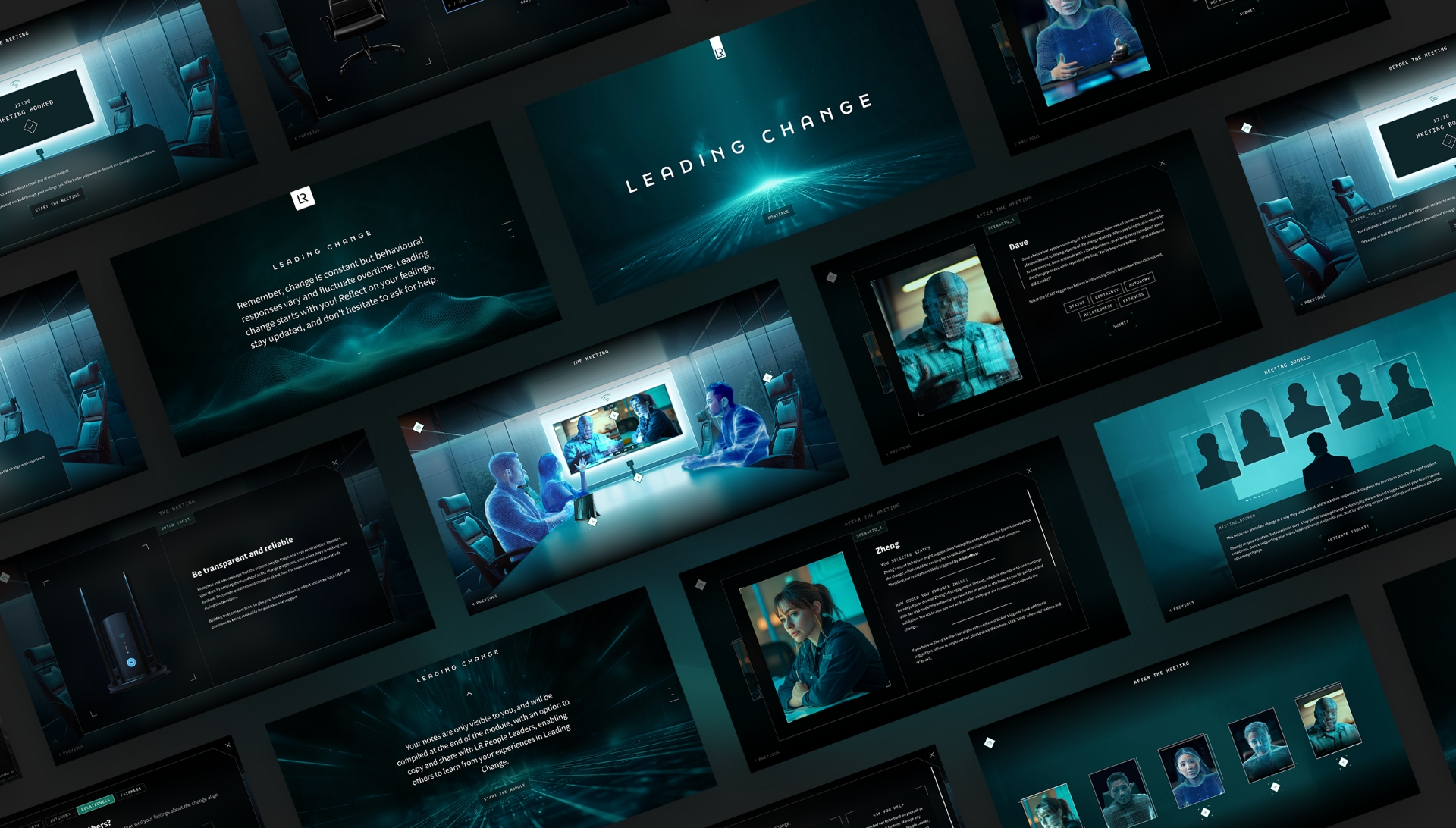
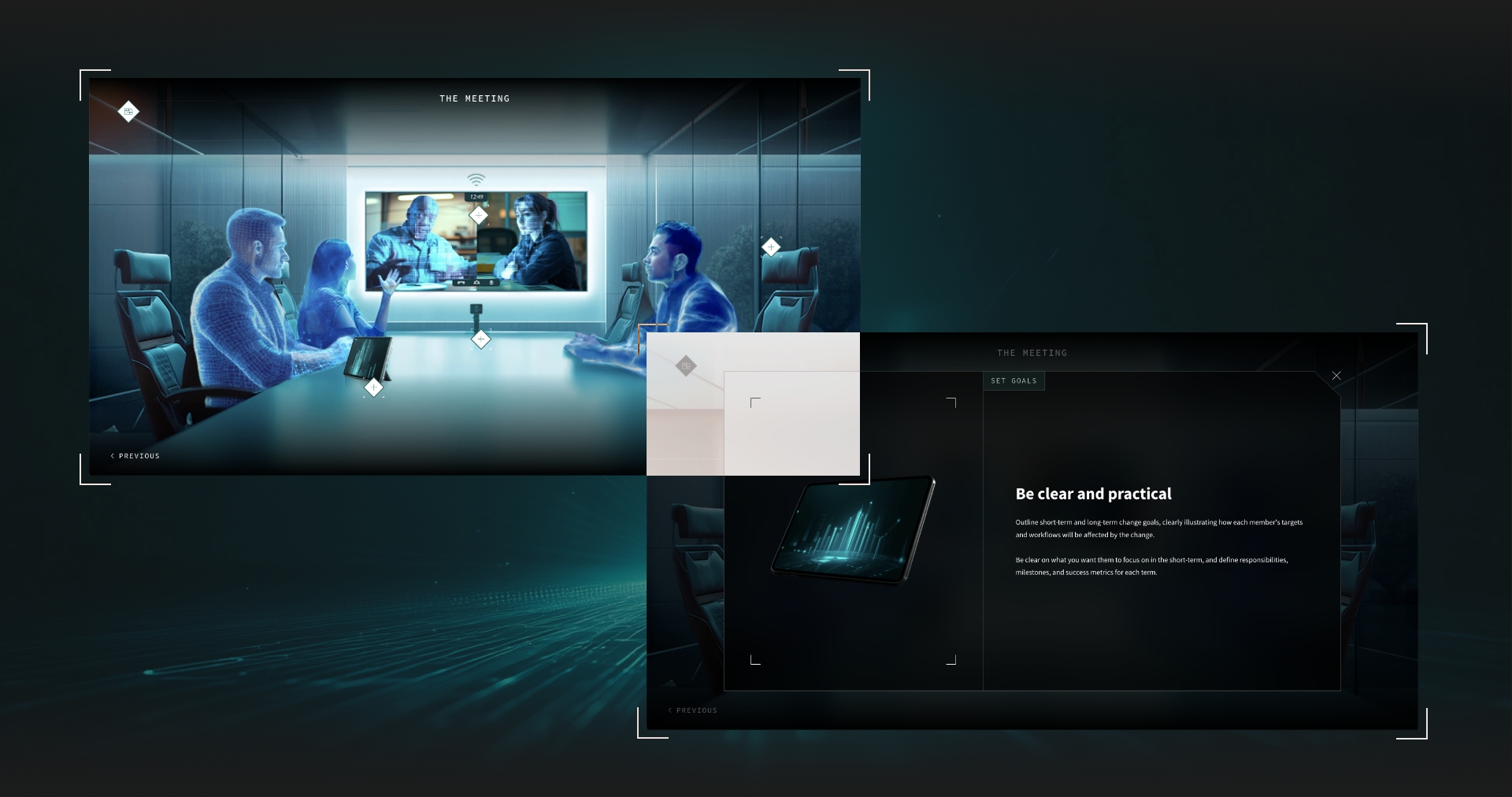
We wrapped it all in the futuristic world of The Legacy. Five fictional team members, each reacting to change in their own way, challenge leaders to put the model to work. Reflective spaces capture their thinking. Team-specific resources take the conversation back to their real people.
The Team
Key Project Assets
Three-Pillar Narrative Model
It Starts with You, Discuss and Track, Empower: a strategic spine that moves leaders from self-awareness to team conversation to individual support, giving the experience its shape and its logic.
Five Fictional Team Members
Characters who each respond to change differently, turning the SCARF Model from theory into practice by asking leaders to read a reaction and choose how they would respond to it.
The Legacy World, Revisited
The futuristic visual world of The Legacy, carried forward so People Leaders arrive somewhere familiar and the learning feels like one continuing story rather than another standalone course.
Reflection and Planning Spaces
Built-in spaces where leaders record their own experience of leading through change, share it with others and plan their next step, so the learning leaves the screen with them.
Team-Specific Resources
Tailored tools leaders take straight into their own one-to-ones and team conversations, grounding everything they have learned in the specific people they actually lead, every day.
Impact
Leading Change gave LR’s People Leaders a shared language for change and a reason to use it: the SCARF Model, applied to their own team, inside a world they already knew.
Project Insights
From managing change to leading it
Change management guidance fails for a simple reason. It describes change the way the company sees it, not the way a team feels it. Start with the leader’s own reactions, then put five very different people in front of them, and the experience stops being about change in general and starts being about the people in the room.
It also proves the value of building a world and staying in it. The Legacy gave LR’s People Leaders a place. Leading Change gave them a reason to come back. A continuing story gets opened. Another course gets postponed.

